
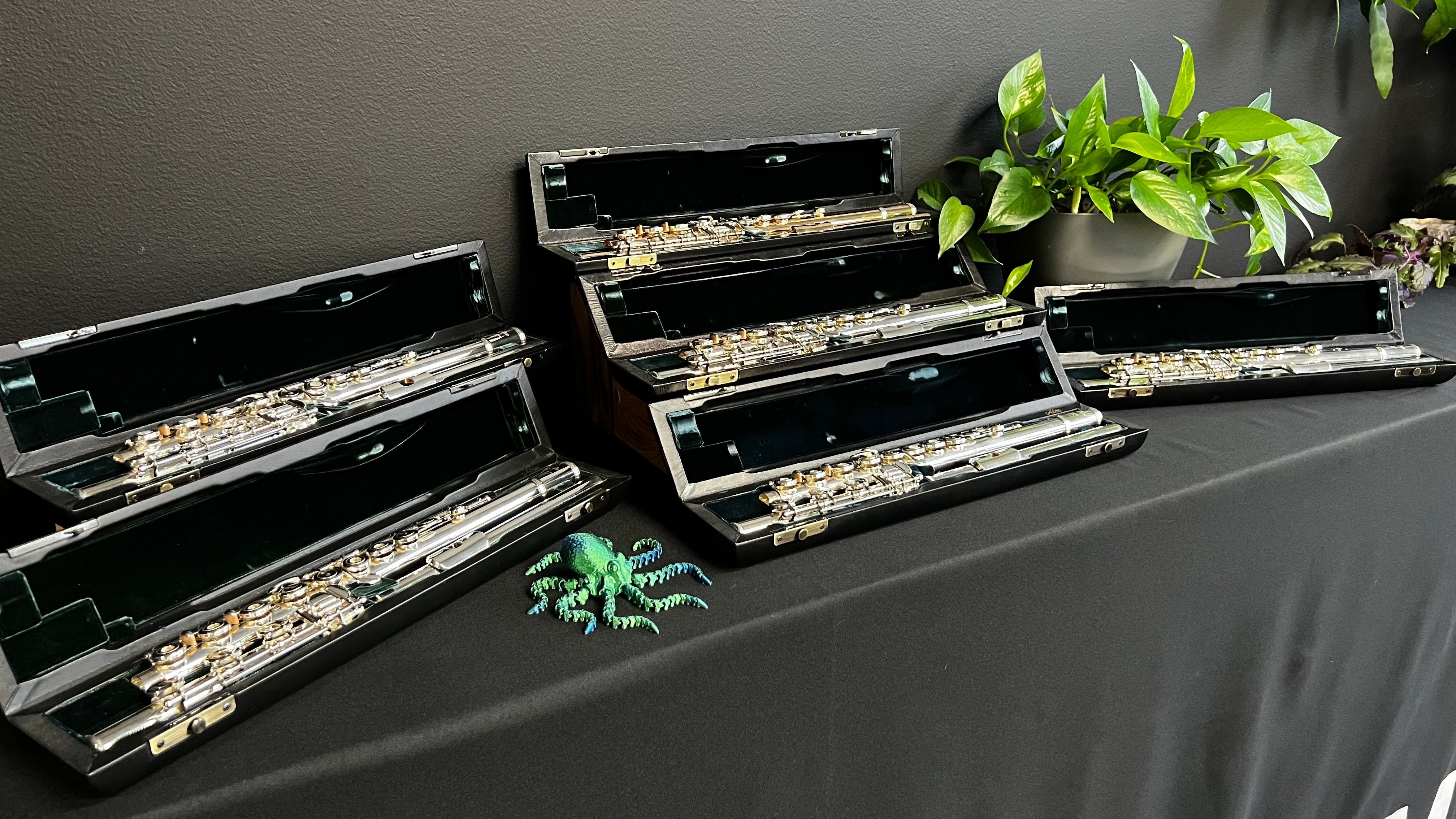
How construction, materials, and design choices define the voice of each Altus handmade flute.

In the world of classical flute craftsmanship, Altus stands as a beacon of both tradition and innovation, harmoniously blending meticulous artistry with modern advances in metallurgy and acoustics. For the discerning flutist—whether a dedicated student, a seasoned professional, or an aficionado of fine instruments—the choice among Altus’s handmade models can be both exhilarating and daunting. Each model in the Altus 1207–1807 series is a unique synthesis of historical inspiration, material science, and thoughtful design, resulting in distinct tonal palettes and performance characteristics.
This comprehensive guide is designed to illuminate the key differences among the Altus 1207, 1307, 1407, 1507, 1607, 1707, and 1807 models. We will explore how variations in tone hole construction—drawn or soldered—impart subtle but meaningful changes to resonance, response, and color. We will examine the metallurgical spectrum of silver alloys used across these models, from sterling and Britannia to pure and proprietary Altus Silver, and discuss how these choices influence both acoustic properties and the tactile experience of playing.
The article is structured to provide a layered, in-depth comparison, guiding you through:
- The underlying philosophy and historical lineage of Altus flute making
- Technical and acoustic distinctions between drawn and soldered tone holes
- Detailed exploration of silver alloys and their artistic signatures
- Model-by-model analysis, including the historical homage represented by the seamed 1607
- Comparative tradeoffs in playability, durability, and value
- The broader context of Altus’s place in the tradition of handmade flutes
- Practical guidance to help match your musical goals with the right instrument
Whether you are searching for the warmth and flexibility of sterling silver, the depth and complexity offered by Britannia or pure silver, or the singular voice of Altus’s proprietary alloy, this guide will empower you to make a confident, informed decision. We invite you to engage deeply with the nuanced world of Altus flutes, and to discover the model that will become the next chapter in your artistic journey.
Altus Flute Philosophy and Historical Lineage
Altus flutes stand at the confluence of reverence for tradition and a tireless pursuit of innovation, honoring the legacy of the great French makers while embracing scientific rigor and modern artistry. Founded in the late 20th century by Shuichi Tanaka, Altus has consistently positioned itself as both guardian and innovator within the global handmade flute community.
The philosophical core of Altus is rooted in the meticulous study of 19th-century French flute craftsmanship, most notably the work of Louis Lot. Lot’s seamed tubes, soldered tone holes, and precise keywork established benchmarks for resonance, projection, and mechanical reliability—qualities that Altus has studied in depth and sought to reinterpret for contemporary artists. This historical lineage is not mere homage; instead, it is an ongoing dialogue with the past, leveraging archival research, metallurgical analysis, and hands-on restoration to translate historical wisdom into modern instruments.
Altus’ approach to metallurgy is particularly scholarly. Each silver alloy employed is the result of exhaustive acoustic research and empirical testing, designed to optimize vibrational response while honoring the tactile nuances demanded by professional flutists. The company’s acousticians and master craftspeople engage in iterative prototyping, measuring not only the physical properties of materials but also the subjective experiences of elite performers.
Central to the Altus process is collaboration with artists. The design and refinement of each model rely on extensive feedback from a global cohort of soloists, orchestral players, and pedagogues. This ongoing partnership ensures that each flute is not only a technical achievement but also a responsive companion to the evolving musical imagination of its players.
| Tradition | Altus Interpretation |
|---|---|
| Louis Lot seamed tubes & soldered tone holes | Recreated in the Altus 1607, emphasizing resonance and historical authenticity |
| French keywork and mechanism design | Modernized for ergonomic performance and mechanical reliability |
| 19th-century silver alloys | Expanded palette: Sterling, Britannia, Pure, and proprietary Altus Silver |
| Artist collaboration and feedback | Embedded in all Altus R&D and model evolution |
In summary, the Altus handmade flute line is a living synthesis of tradition and progress, drawing deeply from the well of French flute history while shaping a distinctly modern voice for today’s flutist.
Tone Hole Construction: Drawn vs. Soldered
The method by which tone holes are formed on a flute body is a decisive factor in both its structural character and its acoustic identity. Altus, in honoring both tradition and modern engineering, offers handmade flute models with either drawn or soldered tone holes, each embodying a distinct philosophy of sound and craft.
Historical Development and Technical Overview
Drawn tone holes are created by pulling the metal of the body tube upward into a seamless chimney. This technique, developed in the late nineteenth century, offers mechanical efficiency and smooth integration with the flute’s body. Soldered tone holes, in contrast, are fashioned separately and then meticulously affixed to the tube by hand—a method championed by the legendary Louis Lot and the French school. This approach requires immense precision and time, but is revered for its effect on the instrument’s acoustic response.
Acoustic Implications
The physical differences between these methods directly influence the flute’s resonance, color, and response:
- Drawn tone holes (Altus 1207, 1307): Typically yield a slightly lighter, more immediate response, with a clear, centered core to the sound. Their seamless integration often results in a fluid, agile articulation—qualities prized by players seeking rapid response and a direct, unadorned tonal palette.
- Soldered tone holes (Altus 1407, 1507, 1607, 1707, 1807): Introduce a subtle complexity, depth, and richness to the tone. The greater mass and discrete join of the soldered hole are thought to enhance projection and offer a broader palette of tonal colors, especially in the low and middle registers. This construction is favored by artists who seek nuanced timbral shading and dynamic flexibility.
| Model | Tone Hole Type | Key Acoustic Traits |
|---|---|---|
| 1207 | Drawn | Direct, agile, clear core |
| 1307 | Drawn | Fluid response, centered tone |
| 1407, 1507, 1607, 1707, 1807 | Soldered | Complex, rich, sonorous, flexible |
Ultimately, the choice between drawn and soldered tone holes is a matter of personal resonance—literally and figuratively. For those who favor immediacy and clarity, drawn tone holes may prove ideal; for those who seek tonal sophistication and expressive breadth, soldered tone holes offer a compelling invitation.
Silver Alloys and Their Acoustic Signatures
The selection of silver alloy is a defining element in the art of flute making, shaping not only the visual character of each instrument but its acoustic fingerprint as well. Altus, in its handmade series, draws upon a rich palette of silver alloys—each with distinct metallurgical properties and tonal outcomes—reflecting both historical precedent and modern inquiry.
The Spectrum of Silver Alloys in Altus Flutes
| Alloy | Purity | Used In Models | Acoustic Signature | Historical Context |
|---|---|---|---|---|
| Sterling Silver | 92.5% Ag | 1207, 1407 | Balanced warmth, moderate brilliance, familiar resistance; versatile for most repertoire. | Standard since late 19th c.; prized for reliability and repairability. |
| Britannia Silver | 95.8% Ag | 1307, 1507, 1607 | Greater purity yields increased resonance, depth, and color complexity. | Favored by historic French makers for flexibility and nuance. |
| Pure Silver | 99.7% Ag | 1707 | Maximum resonance, liquid projection, and crystalline clarity; demands refined embouchure. | Rare in flute making due to softness; recently re-explored for tonal extremes. |
| Altus Silver (Proprietary) | Proprietary | 1807 | Hybrid qualities: warmth, richness, and unique overtone layering, tailored for modern demands. | Result of Altus research, echoing vintage timbres with contemporary stability. |
Alloy Selection: Practical and Artistic Implications
Each alloy’s purity and hardness affect not only the instrument’s resonance and timbral palette, but its response under the fingers. Sterling silver’s familiar feel offers a point of reference for many, while Britannia and pure silver demand—and reward—greater nuance of touch, yielding a broader spectrum of color and projection. Altus Silver, meanwhile, bridges tradition and innovation, offering a soundscape both familiar and fresh. These choices are not merely technical, but artistic, allowing each flutist to forge a partnership with their instrument that is as personal as it is profound.
Detailed Model-by-Model Analysis
The Altus handmade flute collection embodies a spectrum of tonal and mechanical possibilities, each model defined by a distinctive combination of material, tone hole construction, and manufacturing philosophy. Below is an in-depth exploration of the 1207, 1307, 1407, 1507, 1607, 1707, and 1807, with a focus on their technical makeup, acoustic character, and intended artistic application.
| Model | Tone Holes | Material | Key Features | Acoustic Profile | Ideal Player |
|---|---|---|---|---|---|
| 1207 | Drawn | Sterling Silver (925) | Seamless tube, classic Altus headjoint | Balanced, versatile; clarity and warmth | Serious students, orchestral doubling |
| 1307 | Drawn | Britannia Silver (958) | Higher silver purity, seamless tube | Richer, fuller timbre; supple response | Soloists, chamber musicians |
| 1407 | Soldered | Sterling Silver (925) | Hand-soldered tone holes, increased projection | Focused, robust; nuanced color palette | Advanced students, developing professionals |
| 1507 | Soldered | Britannia Silver (958) | Enhanced resonance, intricate handwork | Complex harmonics, expressive shading | Professional performers |
| 1607 | Soldered | Britannia Silver (958), Seamed Tube | Traditional seamed construction, Louis Lot homage | Exceptional depth, nuanced attack, vintage warmth | Historically informed, tone-focused artists |
| 1707 | Soldered | Pure Silver (997) | Highest silver purity, soldered tone holes | Maximum resonance, brilliant projection | Virtuosi, concerto players |
| 1807 | Soldered | Altus Silver (Proprietary) | Exclusive alloy, advanced metallurgy | Unique tonal complexity, optimized response | Innovators, collectors, tonal explorers |
The 1607: Seamed Body and the Louis Lot Legacy
Of particular note is the Altus 1607, which revives the 19th-century French tradition of seamed tube construction as pioneered by Louis Lot. This meticulous process—rolling and soldering a silver sheet into a tube—yields a body with subtly different vibrational properties compared to modern seamless tubes. The result is a flute with exceptional depth, complexity, and vintage warmth, making it especially prized among historically informed performers and artists seeking the nuanced attack and color palette reminiscent of the French golden age.
1807 and the Altus Silver Innovation
The 1807 model stands apart through its use of Altus Silver, a proprietary alloy developed through decades of acoustic research. This material offers a distinctive blend of tonal complexity and immediacy, supporting advanced musical expression and rewarding the most refined artistic sensibilities. The 1807 is a statement instrument for those who seek to explore new sonic frontiers while retaining the essence of Altus craftsmanship.
Comparative Tradeoffs: Practical and Artistic Considerations
Soldered vs. Drawn Tone Holes: Durability, Repairability, and Tonal Impact
The distinction between soldered and drawn tone holes is one of the most significant choices in the Altus handmade lineup. Soldered tone holes, present on models 1407, 1507, 1607, 1707, and 1807, require precise handwork: tone holes are individually crafted and fused to the tube, resulting in a slightly heavier construction. This additional mass at the tone hole boundary is often credited with producing a more focused, projecting core tone and facilitating nuanced articulation. Repairability is enhanced, as individual tone holes can be more easily addressed in the event of damage.
By contrast, drawn tone holes—featured on the 1207 and 1307—are drawn from the tube metal itself, preserving a seamless connection and yielding a lighter flute. This construction is prized for its open resonance and responsiveness, particularly in softer dynamics, but may be marginally less robust over decades of heavy use.
Alloy Selection: Balancing Warmth, Brilliance, and Cost
The choice of alloy is not merely a matter of tradition but foundational to the instrument’s voice. Sterling silver (925) offers a familiar, balanced sound—warm yet clear, well-suited to a broad range of repertoire. Britannia silver (958), with higher purity, deepens tonal complexity and subtlety, while pure silver (997) maximizes resonance and coloristic potential, albeit at a premium cost. Altus Silver, exclusive to the 1807, carries a unique blend of projection and complexity, designed for the most discerning artists.
Seamed vs. Seamless Tubes: Tradition and Acoustic Nuance
The seamed tube of the 1607 evokes the great French tradition, recalling the meticulous work of Louis Lot. Advocates suggest that the longitudinal seam subtly alters the instrument’s vibration patterns, yielding a tone of particular complexity and immediacy. Seamless tubes, by contrast, provide structural uniformity and are less susceptible to certain forms of mechanical stress.
Key Tradeoffs
| Feature | Options | Artistic Impact | Practical Consideration |
|---|---|---|---|
| Tone Holes | Drawn (1207, 1307) Soldered (others) |
Open, flexible tone vs. focused, projecting sound | Lighter weight vs. increased repairability |
| Alloy | Sterling, Britannia, Pure, Altus | Ranging from balanced to rich and complex | Cost, material durability, feel |
| Body Tube | Seamed (1607) Seamless (others) |
Historical timbre, unique resonance | Traditional artistry vs. structural uniformity |
Cost-Benefit and Longevity
While higher-purity alloys and soldered tone holes command greater investment, they offer expanded tonal possibilities and longevity favored by seasoned professionals and collectors. For advancing students and those seeking a lighter, more immediate response, drawn tone hole models remain compelling. Ultimately, each Altus model represents a distinct intersection of tradition, innovation, and personal voice, inviting careful consideration in alignment with one’s artistic aspirations.
Historical Inspirations and Modern Innovations
The Altus handmade flute series is deeply rooted in the legacy of the 19th-century French flute tradition, most notably the work of Louis Lot, whose instruments are revered for their lyricism, balance, and nuanced craftsmanship. Lot’s flutes, characterized by their seamed tubes, soldered tone holes, and meticulous handwork, set a gold standard for expressive potential and tonal flexibility. Altus’s 1607 model, with its seamed Britannia silver body, stands as a deliberate homage, reviving these historic construction methods to capture the subtle resonance, warmth, and response that define Lot’s masterpieces.
Yet Altus does not rest solely on historical laurels. The company is distinguished by its synthesis of venerable tradition with contemporary scientific rigor. Modern metallurgical techniques and acoustic analysis inform every aspect of design, from the proprietary Altus Silver alloy in the 1807 to the precise shaping of tone holes and keywork for ergonomic efficiency and artistic clarity. These innovations are not merely technical; they reflect an ongoing dialogue with leading artists and pedagogues, whose feedback continually refines the resonance, articulation, and tactile experience of each model.
| Historical Feature | Modern Adaptation | Model(s) Exemplifying |
|---|---|---|
| Seamed Tubes | Precision-welded seams for optimal resonance | 1607 |
| Soldered Tone Holes | Advanced soldering for consistency & projection | 1407, 1507, 1607, 1707, 1807 |
| Hand-selected Silver Alloys | Custom alloys (Altus Silver), acoustic optimization | All models, esp. 1807 |
| Artist Collaboration | Continuous model refinement based on feedback | Entire 12xx–18xx series |
The ongoing evolution of Altus flutes thus lies at the intersection of heritage and innovation: a living tradition where reverence for past masters coexists with a resolute pursuit of technical and artistic advancement. This approach ensures that each instrument is not only a vessel of historical knowledge but also a springboard for individual expression in the contemporary concert hall.
Making the Confident Choice
Choosing among the Altus handmade flute models—1207, 1307, 1407, 1507, 1607, 1707, and 1807—requires a nuanced understanding of your artistic priorities, tonal aspirations, and the contexts in which you perform. Each model represents a distinct confluence of tradition and innovation, meticulously crafted to serve not only the technical demands of flutists but also their unique expressive voices. The options before you are not merely incremental upgrades, but rather finely tuned instruments tailored to specific musical sensibilities and career trajectories.
| Model | Silver Alloy | Tone Hole Construction | Key Attributes | Best For |
|---|---|---|---|---|
| 1207 | Sterling Silver | Drawn | Agile, clear, economical | Advancing students, chamber musicians |
| 1307 | Britannia Silver | Drawn | Warmth, nuanced color | Artists seeking lyricism |
| 1407 | Sterling Silver | Soldered | Greater projection, focus | Serious students, orchestral work |
| 1507 | Britannia Silver | Soldered | Complex overtones, power | Advanced performers, soloists |
| 1607 | Britannia Silver | Soldered, Seamed Body | Historic resonance, artisanal prestige | Connoisseurs, those seeking Louis Lot character |
| 1707 | Pure Silver | Soldered | Maximum brilliance, transparency | Virtuosi, contemporary repertoire |
| 1807 | Altus Silver | Soldered | Signature blend, unique tonal palette | Explorers, those seeking the Altus ideal |
In summary, the choice of model should be guided by your tonal preferences, performance demands, and reverence for historical or contemporary styles. The 1207 and 1307 offer ease and classic warmth for those seeking lyrical expressiveness; soldered models—especially the 1407, 1507, and 1707—provide increased projection and tonal complexity for the modern stage. The 1607, with its seamed body, bridges past and present for the historically attuned flutist, while the 1807 stands as the culmination of Altus innovation.
Built with professional materials and exacting standards, Altus flutes provide the tonal clarity and mechanical reliability players need when stepping into more advanced repertoire and performance settings.
If you have any questions or need any assistance with selecting the right Altus flute for you or your student, feel free to email or give us a call!
The Mighty Quinn Brass and Winds
Email: customerservice@brassandwinds.com
Phone: (425) 408-0393 Monday-Friday 10am-4pm PST.
Share:
What to Look for When Buying a Clarinet Mouthpiece
A Practical Guide to Shires Q-Series Tenor Trombones