call
call

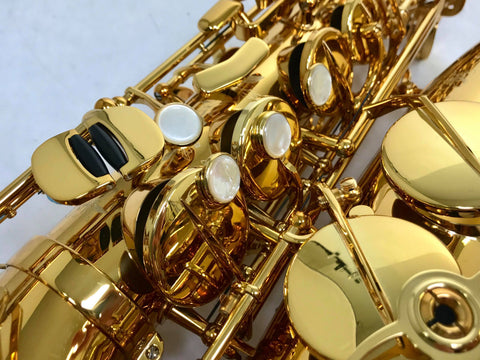
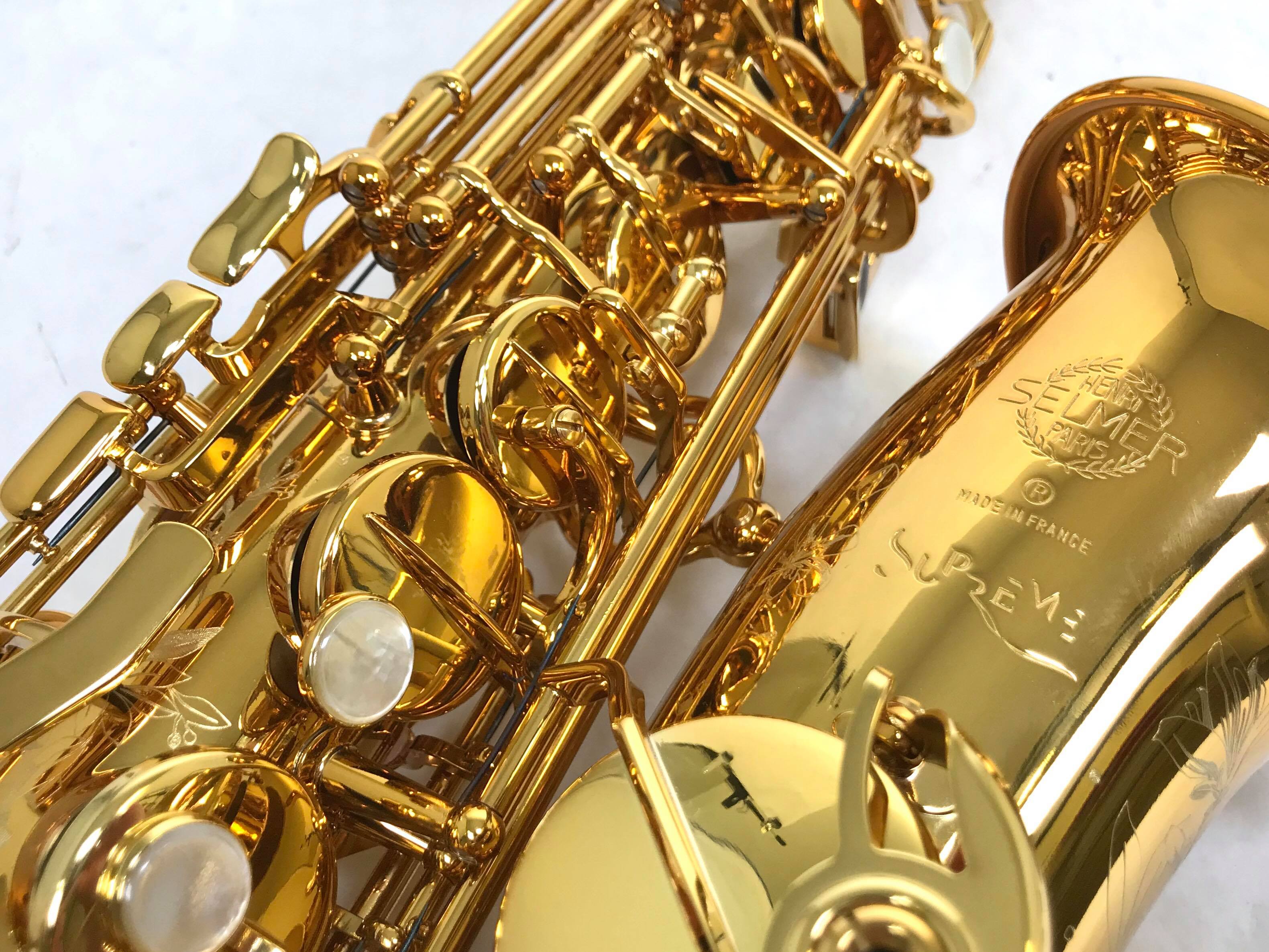
In the weeks since we got our first shipment of Selmer Supreme Altos, I've had a few opportunities to sit down and spend some time with them. They are interesting horns, for sure; they feature a number of design elements that seem to be unique to the Supreme (such as an interesting configuration to left hand c) while also blending in popular aspects from horns of the past.

One such of these features is the neck tenon, which is a loose ring with a screw (akin to a hose clamp) over a receiver that has been cut four ways - an arguably more secure way to handle neck fitting that I’ve only ever seen on vintage SML saxophones.

Other tweaks from the Ref 54 include a longer bell, and slightly tweaked touch pieces which kind of feel like a perfected mix between the MKVI and MKVII, in the sense that they feel more solid like the MKVII but are not so big as to feel cumbersome. In fact, it’s hard to put my finger on exactly what changes they made, but the Supreme might be one of the most comfortable saxophones to use that I can readily think of.

Overall, the Supreme is a saxophone that pays homage to the past, while bringing in enough new that the horn as a whole feels like a solid leap forward for Selmer.
Latest Stories

View all

How to Choose a Professional Saxophone: Yamaha vs. Yanagisawa vs. Selmer vs. Eastman

How to Choose a Professional Saxophone: Yamaha vs. Yanagisawa vs. Selmer vs. Eastman

Choosing a professional saxophone is less about finding the “best” horn overall and more about finding the one that perfectly fits your sound, playing style, and long-term goals. Yamaha, Yanagisawa, Selmer Paris, and Eastman all produce stage-ready professional instruments, but they approach ergonomics, aesthetics, and tonal philosophy differently. This comprehensive guide breaks down the major contemporary lines from each legendary manufacturer to help you identify the perfect match for your musical voice.

Read more

Choosing Your Instrument: Student, Step-Up, and Professional Tiers

Choosing Your Instrument: Student, Step-Up, and Professional Tiers

Selecting the right brass or woodwind instrument is a pivotal moment in any musician’s journey. From the durability required by beginners to the nuanced craftsmanship sought by professionals, the differences between instrument tiers are rooted in a century of design evolution. This guide explores the distinct characteristics of student, step-up, and professional models to help you make an informed investment that supports your specific musical goals and growth.

Read more

Shires Q38 and Q39 Contrabass Trombones: European vs. American Tuning

Shires Q38 and Q39 Contrabass Trombones: European vs. American Tuning

We are thrilled to welcome the Shires Q38 and Q39 contrabass trombones to the shop, offering players a serious and professional entry into the world of true low brass authority. These models acknowledge the diverse traditions of contrabass playing by offering two distinct tuning systems: the Q38 in European tuning (F/D/BBb/AAb) and the Q39 in American tuning (F/Db/C/AA). With additional options for gold or yellow brass bells, these instruments provide the depth and presence required for the most demanding orchestral and film repertoire.

Read more