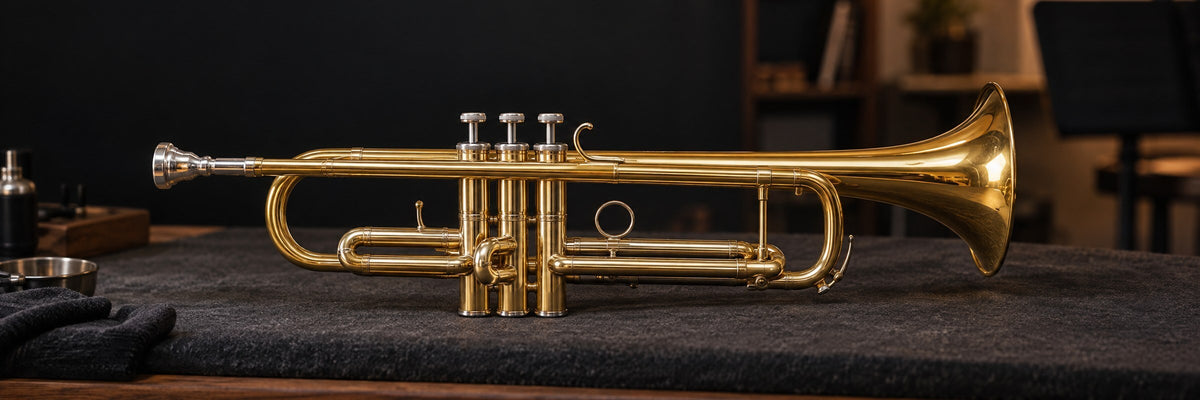
Choosing a trumpet gets easier when you start with the music you want to play. Are you getting ready for school band? Looking for more control as you advance? Choosing a horn for professional work?
Think about what you need from the instrument each day. Your teacher can help you narrow the choices, and a playing test can tell you how a trumpet feels.
Start with a Bb trumpet
If you're starting lessons or joining a school band, a Bb trumpet is usually what you'll need. Many professionals use one throughout their careers, too.
- Ask your teacher or band director which instrument your program requires.
- Choose a trumpet that feels comfortable to hold, with reachable or adjustable slide rings.
- Include a protective case, valve oil, and routine service in your budget.
- Consider renting if you're still deciding whether trumpet is a long-term commitment.
For beginners: choose a trumpet that helps you learn
When you're learning, you have plenty to think about already. Valves that stick or slides that won't move can make practice harder than it needs to be.
Start with an instrument in good working order, then check how comfortably you can hold it.
- Check that the valves move freely and return without sticking.
- Make sure you can reach the slide rings without straining your hand.
- Ask your teacher to help you check the response and tuning.
- Check which accessories come with the instrument so you know what else you'll need.
For example, the Yamaha YTR-2330C is a student Bb trumpet with an adjustable third-valve slide ring. The listed package includes a Yamaha TRC-203 case, an 11B4 mouthpiece, and care products.
For advancing players: work out what you want to change
Before you shop for an upgrade, ask yourself where your current trumpet feels limiting. Is it hard to start quiet notes? Are you struggling to control the sound at different volumes?
Have a technician check the instrument first. Sticky valves or an air leak can make a suitable trumpet feel difficult to play.
If it's working properly, talk through your goals with your teacher. An intermediate model may suit you, or a serviced used professional trumpet may fit your needs and budget.
- Bring familiar music so you can compare how each trumpet responds.
- Try quiet entrances and changes between registers.
- Listen for a sound you can control at soft and loud volumes.
- Check intonation, which means how accurately the notes play in tune.
You don't have to buy every level of trumpet in order. Choose an upgrade when you can explain what you need it to do better.
For professional players: match the trumpet to the job
Choose a model that meets your playing needs, whether that's lead work, orchestral playing, or a mix of settings. Test it with the music you'll actually perform.
Pay attention to how the whole instrument feels. Bore size is the internal tubing diameter measured through the valve section, but it's only one part of the design.
The bell and leadpipe also affect the response. Two trumpets with the same bore measurement can feel different when you play them.
- For lead work, try the range and volume your parts require, and notice how you feel after sustained playing.
- For orchestral work, test quiet entrances, tuning, and changes in tone color.
- For section playing, listen for how easily you can blend with the musicians around you.
- Compare each option with your current trumpet using the same familiar passages.
The SE Shires Q10S is one professional Bb example to try for serious study and varied ensemble work.
The Yamaha YTR-8335LAII is another example. Its design targets commercial, studio, and stage playing, and it also blends well for section work.
When do you need a C trumpet, piccolo trumpet, flugelhorn, or cornet?
Let the music guide you here. You may need another instrument when a part calls for a different sound, key, or range.
A C trumpet for orchestral and related work
A C trumpet is common in orchestral playing and also appears in chamber and solo work. Ask your teacher when it makes sense to add one.
The Bach C190SL229X Stradivarius is one professional C trumpet example for this kind of playing.
A piccolo trumpet for specialist repertoire
A piccolo trumpet can be useful for high-register parts in Baroque music and certain orchestral and chamber works. It's a specialist instrument that takes practice.
For example, the S.E. Shires TRQ9S is a four-valve Bb/A piccolo trumpet with interchangeable leadpipe bits.
- Choose one when the music you study or perform gives you a reason to use it.
- Remember that its smaller size doesn't make it a beginner instrument or a shortcut to high notes.
- Consider a specialized piccolo mouthpiece instead of what you're using for Bb.
A flugelhorn for a warmer sound
If you play jazz ballads or parts that call for a warmer, mellower sound, a flugelhorn may be useful. It gives you another sound to work with alongside your trumpet.
A cornet for brass bands and other styles
A cornet offers a rounded sound often used in brass bands and traditional jazz. You may also need one when a score specifically calls for cornet.
If you're joining a group, ask which instrument the part requires before you buy.
Buying new or used? Look closely at condition
A serviced used trumpet can put a professional instrument within your budget. Take time to learn about the individual horn, even if you know the model well.
- Ask about valve wear, leaks, corrosion, and past repairs.
- Check whether dents affect the leadpipe, valve section, or slide movement.
- Confirm the included case, mouthpiece, warranty terms, and return policy.
- Read the exact listing, since condition and accessories vary between examples of the same model.
Give each trumpet a fair playing test
Bring music you know well, including something comfortable and something that challenges you. Use the same familiar mouthpiece when comparing full-size trumpets, where compatible.
Keep the room and music consistent so you can hear differences between the instruments.
- Play soft attacks, long tones, slurs, and music you perform regularly.
- Check the low and middle registers before testing your upper range.
- Ask someone to listen from across the room.
- Notice comfort and fatigue after several minutes.
- For an online purchase, ask about condition and the return process before ordering.
When you talk with us at The Mighty Quinn Brass and Winds, tell us what you play and what you'd like to change about your current setup. That helps us narrow the options to instruments that fit your needs.
We try to accommodate play-test requests when our technicians are available.
Share:
Backun Clarinets: A Guide to Choosing Your Next Instrument