“I wanted an electric train for Christmas but I got the saxophone instead.” ~ Clarence Clemons
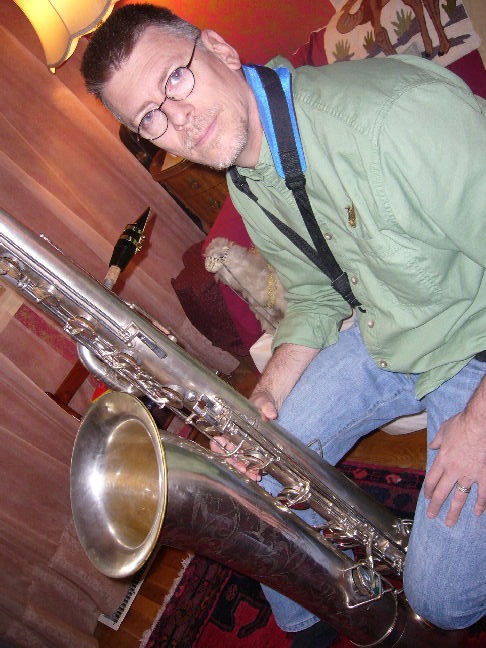 The bass saxophone is one of the largest members of the saxophone family—larger than the more commonly encountered baritone saxophone. Only the contrabass sax is larger. It was the first type of saxophone presented to the public, when Adolphe Sax presented a bass saxophone in C at an exhibition in Brussels in 1841. The modern bass saxophone is a transposing instrument pitched in B♭, an octave below the tenor saxophone. The bass saxophone is not commonly used, although in the 1920s, it was used in some jazz recordings.
I have owned both a vintage Buescher and currently own and play an Eppelsheim bass sax. Having played every existing kind of sax except for the slide sax, I have some observations to share with anyone considering purchasing and playing such a beastie that is the bass sax.
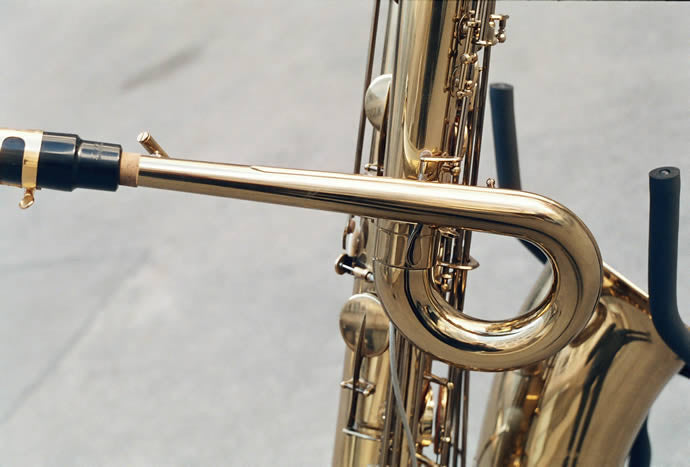
 1. It’s frickin’ big: Talk about an elephant in the china shop, this sucker is big and heavy. Getting it to a gig and playing it is a big pain in the butt. You have to buy into the fact that if you are going to perform publicly you will need a big car, a cart for the large case, and the challenge of reading around the neck that is in front of your face.
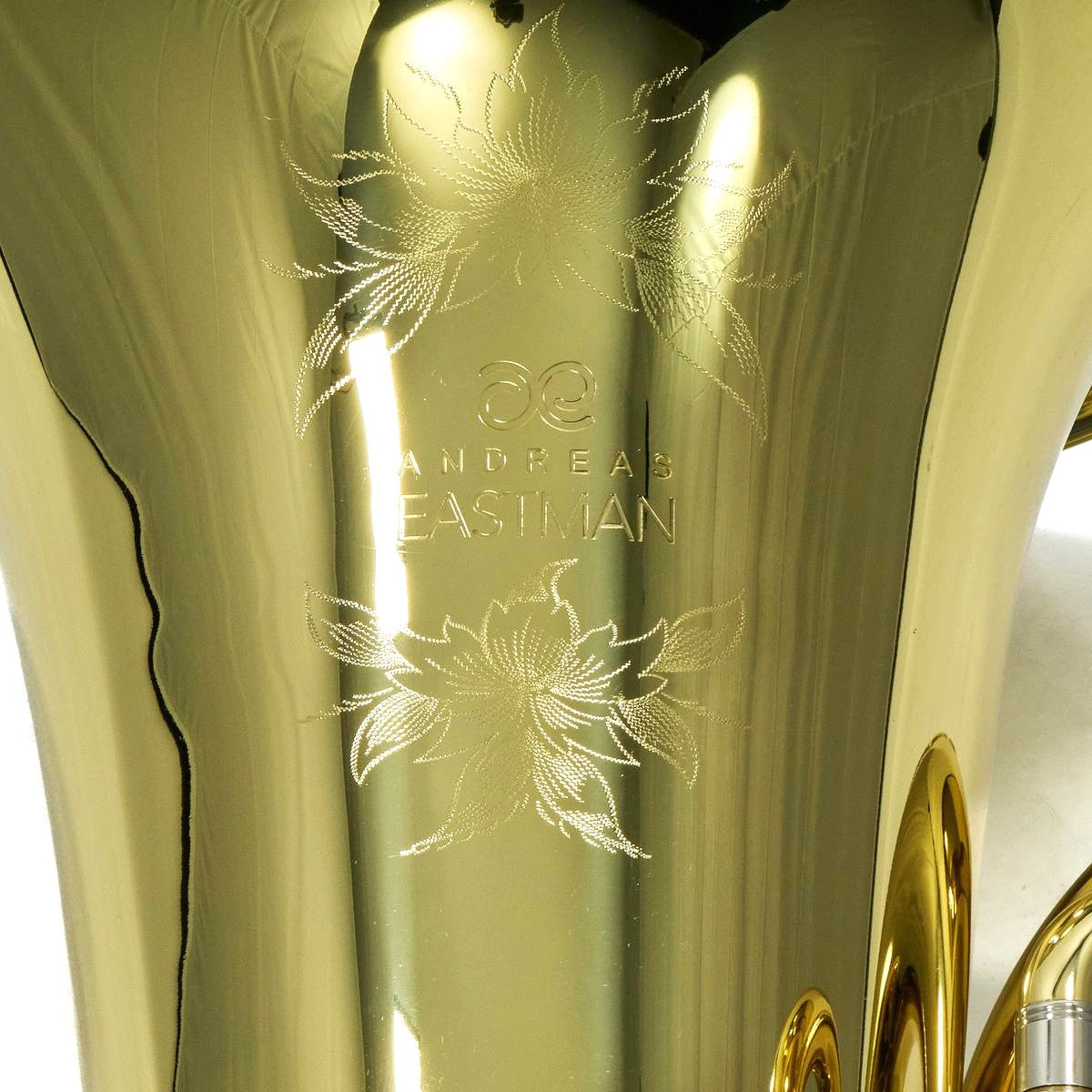
2. No Music: There isn’t much written music for the instrument. Because of this, you are mostly doubling on the bass sax or you end up sitting in the band waiting for a chart to come up with a bass part. So now you are carrying two instruments. Or, as I have for my sax quintet, you will have to write or transpose a lot of music to create the music for this instrument.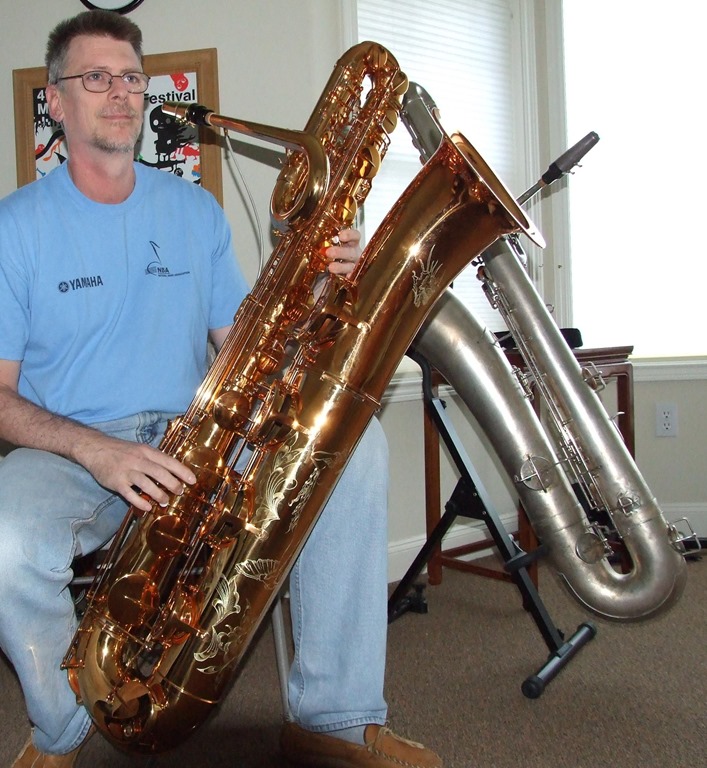 3. Expensive: Good bass saxes tend to be expensive. You can plan on spending an average of $15,000 for a vintage bass sax and it will need some maintenance. For a modern Eppelsheim bass sax, you can expect to pay $25,000 and up depending upon adding extras. For example, my bass sax is keyed to low A and has a Venus de Milo engraving.You might have to replace a case that is falling apart. That’s expensive too. You might end up looking for a mouthpiece that works for you. That’s even more money and we haven’t even talked about reeds yet. Some repair techs will not work on the behemoth.
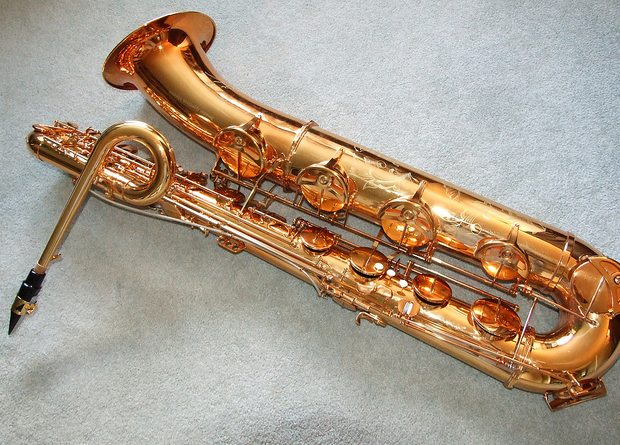
4. No gigs: That’s right, there are very few gigs for a bass sax. Have you ever heard of a musician who made any serious money, year after year on a bass sax. I thought not.
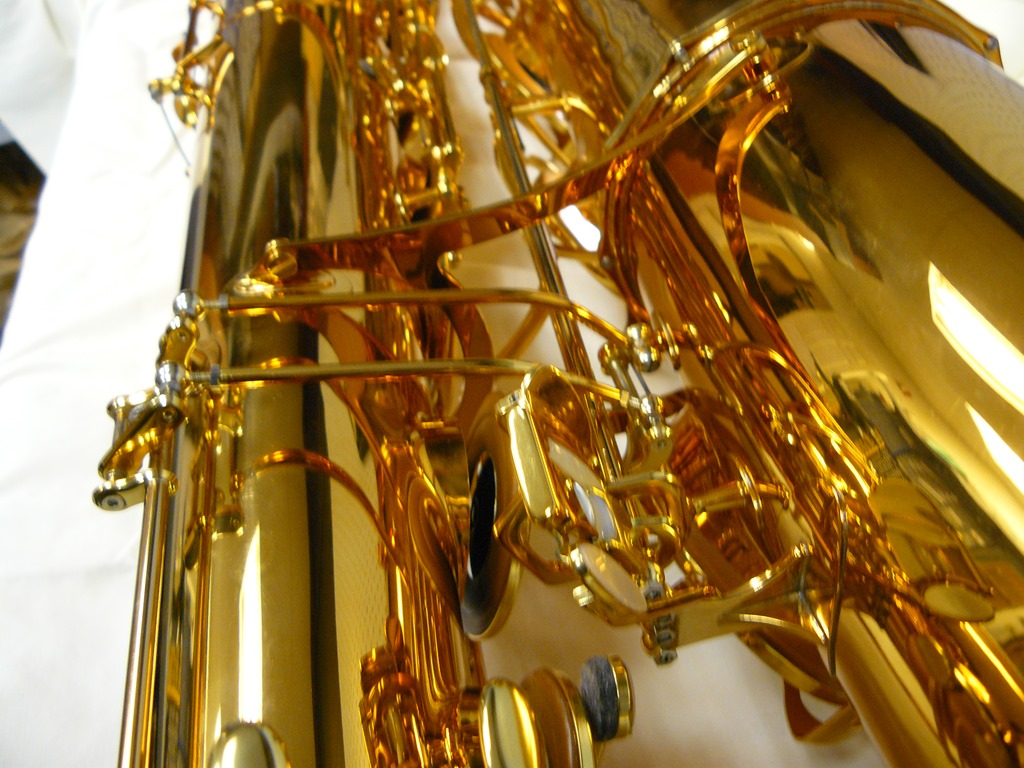
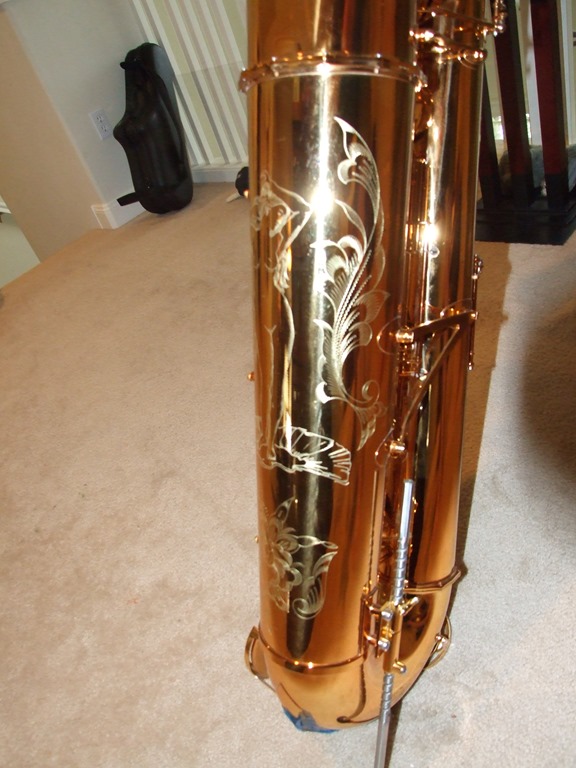 5. The vintage thang: Most of the available bass saxes are vintage. When I owned the Buescher bass sax, I played with mouthpieces, reeds, and ligs trying to perfect the sound I produced. See, vintage bass saxes were built with baritone sax pads to save money. If you look at the modern Eppelsheim bass sax, you will noticed the bell pads are huge! That makes voicing easier. On the vintage horns, you had to use alternate fingerings for notes like the D2 to get a strong voicing. And the ergonomics on the old bass saxes meant that you really had to stretch those pinkies to play the thing. This is no longer necessary on the Eppelsheim.
All of that said, I really love the sound of the bass sax. It is resonate and full, and makes my back teeth rattle. For the true saxophone connoisseur, this is an instrument that you will want to have in your arsenal. For those significant others who’s partners are hooked (aka addicted) to saxophones, my apologies for for sharing this sax porn article.
For more conversation about the bass sax consider joining the largest bass sax forum out there: Bass Sax Coop.
Cheers,
Jim Glass
Share:
Musician 101: Developing an Internal Pulse
The Mysterious Mazzeo “System” Clarinet