Professional Saxophone Choices
Choosing a professional saxophone is less about finding the “best” horn overall and more about finding the instrument that fits your sound, playing style, budget, and long-term needs. Yamaha, Yanagisawa, Selmer Paris, and Eastman all make serious professional instruments, but they feel and respond differently. This guide compares the major contemporary options from each brand and explains who each is best suited for.
What Makes a Saxophone “Professional”?
A professional saxophone is built for advanced players who need excellent tone, reliable intonation, fast response, durable keywork, and consistency across the full range of the instrument. At this level, the mouthpiece, reed, and player matter enormously. A professional saxophone gives you more control and range of expression, but it will not automatically create a professional sound on its own. Key attributes include:
-
Intonation: How accurately the saxophone plays in tune across low, middle, and high notes.
-
Response: How easily the instrument speaks, especially in soft dynamics, fast passages, and the low register.
-
Keywork: The feel, speed, comfort, and precision of the keys under the hands.
-
Tone color: The character of the sound — focused, bright, dark, warm, broad, flexible, or complex.
-
Build quality: Materials, adjustment stability, pad seating, soldering, engraving, finish, and long-term reliability.
-
Serviceability: How easily a technician can maintain and regulate the instrument over time.
Quick Brand Overview
-
Yamaha: Known for a clean, even, precise, and reliable personality. It is best known for excellent intonation, consistency, and ergonomic keywork. The typical buyer is a player who wants a dependable, highly controllable horn for any setting.
-
Yanagisawa: Known for a refined, balanced, smooth, and beautifully built personality. It is best known for superb craftsmanship, comfortable action, and elegant response. The typical buyer is a player who values precision, comfort, and a polished feel.
-
Selmer Paris: Known for a complex, expressive, colorful, and iconic personality. It is best known for a classic professional sound, tonal depth, and a strong artistic identity. The typical buyer is a player seeking a distinctive voice for classical, jazz, or solo work.
-
Eastman: Known for a warm, flexible personality that offers strong value. It is best known for providing professional features at a more accessible price. The typical buyer consists of advancing and professional players who want a serious horn without the highest price tag.
Yamaha Professional Saxophones

Yamaha professional saxophones are known for consistency. They tend to play evenly from top to bottom, with reliable intonation and comfortable keywork. For many players, Yamaha is the safest professional choice because the instruments are predictable, durable, and easy to service.
Key Professional Lines
-
Yamaha Custom Z Series — 82Z: Available in models such as alto and tenor, the Custom Z is Yamaha’s more flexible, free-blowing professional line. It is often favored by jazz, commercial, and contemporary players who want a quick response and a lively sound.
-
Yamaha Custom EX Series — 875EX: The Custom EX is designed for refinement, stability, and tonal control. It is especially popular with classical players, concert band performers, and saxophonists who want a centered, elegant sound.
Strengths & Tradeoffs
-
Strengths: Excellent intonation and even scale; very consistent build quality from horn to horn; comfortable, modern key layout; easy to maintain and widely supported by repair technicians. It is a strong choice for players who double across styles.
-
Tradeoffs: Some players find Yamaha less “colorful” or less naturally complex than Selmer or Yanagisawa. The clean response can feel almost too controlled for players who want a more vintage-style resistance. The Custom Z and Custom EX feel different, so choosing the right Yamaha model matters.
-
Best For: Yamaha is ideal for the player who wants a professional saxophone that works in nearly every situation: classical ensembles, jazz bands, pit orchestras, studio work, teaching, and doubling. Choose the Custom Z if you want a more open, flexible feel. Choose the Custom EX if you want more centered control and refined tone.
Yanagisawa Professional Saxophones

Yanagisawa saxophones are highly respected for their craftsmanship, smooth keywork, and refined response. They often feel extremely well balanced in the hands, with a polished mechanical feel and elegant tone.
Key Professional Lines
-
Yanagisawa WO1 / WO2 Professional Series: These are the core professional models. The WO1 models typically use brass construction, while WO2 models are associated with bronze-body designs on many alto and tenor models. The result is a responsive, professional instrument with a clear and balanced sound.
-
Yanagisawa WO10 / WO20 Elite Series: The Elite models add upgraded construction details and a more refined playing feel. WO10 models are generally brass, while WO20 models are often bronze-body instruments. These are popular with players who want a premium horn with exceptional keywork and tonal depth.
-
Yanagisawa Solid Silver and Specialty Models: Some Yanagisawa models incorporate solid silver necks or bodies. These are premium options for players seeking a more specialized tone and response.
Brass vs. Bronze in Plain Language Yanagisawa is well known for offering brass and bronze models. The difference is subtle and depends on the player, mouthpiece, and reed, but many players describe it this way:
-
Brass models: Clear, direct, responsive, and balanced. These may suit players who want focus and immediacy.
-
Bronze models: Slightly warmer, broader, and more complex in color. These may appeal to players who want a rounder, richer sound.
Strengths & Tradeoffs
-
Strengths: Excellent craftsmanship and mechanical precision; very comfortable key action; balanced tone with refined response; strong intonation and consistency. It offers good options for players who care about material and tonal nuance.
-
Tradeoffs: Often priced in the premium range, especially Elite and specialty models. The refined feel may not satisfy players looking for a rawer or more vintage-style instrument. Availability can vary depending on model, finish, and saxophone type.
-
Best For: Yanagisawa is best for players who want premium build quality, smooth keywork, and a refined, balanced sound. It is an excellent choice for classical players, jazz players, doublers, and professionals who value comfort and precision.
Selmer Paris Professional Saxophones

Selmer Paris has one of the most important legacies in saxophone history. Many iconic classical and jazz recordings were made on Selmer instruments. Modern Selmer Paris saxophones continue that tradition with expressive tone, tonal complexity, and a strong artistic identity.
Key Contemporary Lines
-
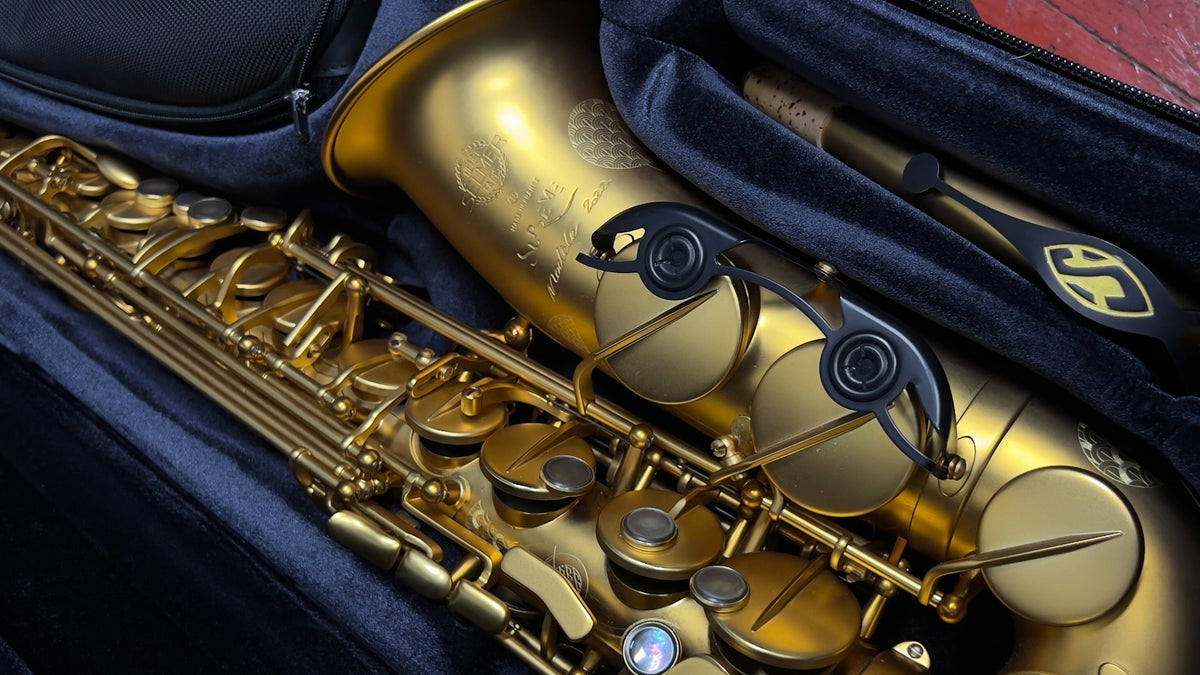
Selmer Paris Supreme: The Supreme series represents Selmer’s modern flagship concept. It is designed for improved intonation, ergonomic comfort, and a powerful, flexible sound while retaining a distinctly Selmer character.
-
Selmer Paris Signature: The Signature line is designed as a refined professional instrument with a balanced response and a traditional Selmer-inspired sound. It offers a sophisticated option for players who want Selmer character in a modern package.
-
Selmer Paris Series III: The Series III has long been associated with clarity, response, and modern intonation. It remains especially relevant in soprano and baritone contexts, depending on availability and market.
-
Selmer Paris Reference Models: Reference models, such as Reference 54 and Reference 36 tenors, are inspired by classic Selmer designs. They appeal to players who want more vintage-style color and resistance.
-
Selmer Paris Axos: Axos instruments are made by Selmer Paris and are generally positioned as a more accessible professional-level option. They are popular with advancing players, serious students, and professionals seeking Selmer quality at a lower cost than flagship models.
Strengths & Tradeoffs
-
Strengths: Rich, expressive sound with strong tonal personality; excellent choice for players who want color and nuance; historic brand reputation and strong resale appeal; wide range of models with different playing characteristics. It remains popular in both classical and jazz traditions.
-
Tradeoffs: Typically among the most expensive professional saxophones. Different Selmer models can feel quite different, so careful play-testing is important. Some players may prefer the more even, neutral feel of Yamaha or Yanagisawa. Setup quality matters; a Selmer should be well adjusted to show its best qualities.
-
Best For: Selmer Paris is ideal for the player who wants a saxophone with a strong musical identity. Choose Selmer if tonal complexity, expressive flexibility, and tradition are high priorities. The Supreme is the modern flagship choice, the Signature offers a refined professional voice, and Reference models suit players seeking a more vintage-inspired feel.
Eastman Professional Saxophones
Eastman has become a serious option for players who want professional features and strong performance at a more approachable price. Eastman saxophones often provide a warm, flexible sound and solid build quality, making them attractive to advancing students, working musicians, and budget-conscious professionals.
Key Professional Lines
-
Eastman 52nd Street Series: The 52nd Street models are among Eastman’s best-known professional saxophones. They often appeal to jazz and commercial players because of their warm tone, flexible response, and vintage-inspired feel.
-
Eastman Rue Saint-Georges / Professional Series Models: Depending on market and availability, Eastman also offers professional models positioned for refined response, strong intonation, and versatile performance. These instruments are intended to compete with established professional horns at a lower price point.
Strengths & Tradeoffs
-
Strengths: Strong value compared with many premium professional saxophones; warm, flexible tone; good option for jazz, commercial, and general professional use; often includes professional features at a lower cost. It is highly appealing for advancing players moving beyond an intermediate instrument.
-
Tradeoffs: Brand prestige and resale value may not match Yamaha, Yanagisawa, or Selmer Paris. Individual setup and regulation can be especially important. Players seeking the most refined keywork may prefer Yanagisawa or Yamaha. Model availability can vary by region and dealer.
-
Best For: Eastman is best for players who want a capable professional saxophone without paying flagship-level prices. It is a smart choice for advancing students, freelancers, jazz players, and anyone seeking strong performance-to-price value.
Feature-by-Feature Comparison
-
Sound Character: Yamaha offers a clean, focused, and even sound. Yanagisawa delivers a refined, balanced, and smooth profile. Selmer Paris provides a complex, colorful, and expressive character. Eastman trends toward a warm, flexible, and often vintage-leaning presentation.
-
Intonation: Yamaha is excellent and very predictable. Yanagisawa is excellent and stable. Selmer Paris is very good but model-dependent. Eastman is good to very good and setup-dependent.
-
Keywork Feel: Yamaha is modern, comfortable, and precise. Yanagisawa is exceptionally smooth and refined. Selmer Paris offers an expressive, model-specific feel. Eastman is comfortable, but may not feel as refined as premium Japanese horns.
-
Best Use Cases: Yamaha suits all-around professional use, classical, jazz, studio, and teaching. Yanagisawa excels in classical, jazz, doubling, and professional performance. Selmer Paris is best for solo work, classical, jazz, and players seeking a signature voice. Eastman serves well in jazz, commercial use, for advancing students, and value-focused professionals.
-
Price Position: Yamaha sits in the premium category. Yanagisawa spans premium to high premium. Selmer Paris positions at high premium, especially for flagship models. Eastman represents the professional value category.
-
Resale Strength: Yamaha and Yanagisawa are strong. Selmer Paris is very strong. Eastman is generally lower than the big three, but improving.
-
Primary Advantage: Yamaha brings reliability and consistency. Yanagisawa focuses on craftsmanship and comfort. Selmer Paris highlights expressive tone and heritage. Eastman centers on value and professional features for the price.
How to Choose the Right Professional Saxophone
1. Start With Your Main Playing Style
-
Classical and concert band: Yamaha Custom EX, Yanagisawa WO/Elite, and Selmer Supreme or Signature are strong choices.
-
Jazz and commercial music: Yamaha Custom Z, Selmer Reference or Supreme, Eastman 52nd Street, and Yanagisawa bronze models are worth considering.
-
All-around professional work: Yamaha and Yanagisawa are especially strong for players who need one horn to cover many settings.
-
Solo or highly expressive playing: Selmer Paris is often preferred by players who want a more distinctive tonal personality.
2. Decide Whether You Want Neutrality or Personality Some players want a saxophone that gets out of the way and lets them shape everything. Others want an instrument with a strong built-in character.
-
More neutral and controllable: Yamaha
-
Balanced and refined: Yanagisawa
-
Colorful and expressive: Selmer Paris
-
Warm and value-focused: Eastman
3. Consider Ergonomics The best saxophone on paper may not be the best horn in your hands. Pay attention to left-hand palm keys, right-hand side keys, the feel of the low B-flat, B, and C-sharp keys, thumb rest comfort, overall weight and balance, and how naturally your fingers land on the keys. Yamaha and Yanagisawa are often praised for ergonomic consistency. Selmer has a more individual feel depending on the model. Eastman is generally comfortable, but players should compare it directly with the others.
4. Play-Test More Than One Instrument Even among professional horns, individual instruments can vary. If possible, play-test multiple examples of the same model. During a play-test, check soft low notes (low B-flat, B, C, and C-sharp), middle-register tuning, palm key response, altissimo response (if you use it), dynamic range from very soft to very loud, comfort during fast technical passages, and how the horn sounds to a listener, not only under your ear.
5. Budget for Setup and Maintenance A professional saxophone should arrive well adjusted, but every saxophone needs maintenance. Pads compress, corks settle, and regulation changes over time. Always buy from a dealer that checks and adjusts instruments before sale, plan for routine maintenance with a qualified repair technician, and do not judge a professional horn only by how it plays if it is poorly adjusted.
Which Brand Should You Choose?
-
Choose Yamaha if... You want excellent intonation and reliability; you need one horn for many musical styles; you prefer a clean, controlled, modern response; and you value consistency and easy maintenance.
-
Choose Yanagisawa if... You want refined craftsmanship and smooth keywork; you like a balanced, elegant sound; you are interested in brass vs. bronze tonal options; and you want a premium professional horn with excellent mechanical feel.
-
Choose Selmer Paris if... You want a saxophone with tonal complexity and artistic character; you are drawn to the Selmer tradition and resale strength; you want a horn for expressive solo, classical, or jazz performance; and you are willing to pay more for a flagship professional instrument.
-
Choose Eastman if... You want professional performance at a more accessible price; you prefer a warm, flexible sound; you are an advancing student, working player, or value-focused professional; and you do not need the resale prestige of Yamaha, Yanagisawa, or Selmer Paris.
Final Practical Summary
-
Best all-around professional choice: Yamaha Custom Z or Custom EX, depending on whether you want flexibility or refined control.
-
Best for craftsmanship and comfort: Yanagisawa WO or Elite models.
-
Best for expressive tone and tradition: Selmer Paris Supreme, Signature, Series III, or Reference models.
-
Best professional value: Eastman 52nd Street or comparable Eastman professional models.
-
Best for classical players: Yamaha Custom EX, Yanagisawa Elite, or Selmer Supreme/Signature.
-
Best for jazz players: Yamaha Custom Z, Selmer Reference/Supreme, Eastman 52nd Street, or Yanagisawa bronze models.
The right professional saxophone should feel comfortable, play in tune, respond easily, and help you produce the sound you hear in your head. If possible, compare instruments side by side with your own mouthpiece and reeds, and choose the horn that gives you the best combination of sound, control, comfort, and confidence.
We invite you to contact The Mighty Quinn Brass and Winds for personalized recommendations and hands-on trials to help you realize your full musical potential.
Book your appointment here.
Share:
Choosing Your Instrument: Student, Step-Up, and Professional Tiers
Tips from Theo Wanne for Installing Bite Pads