
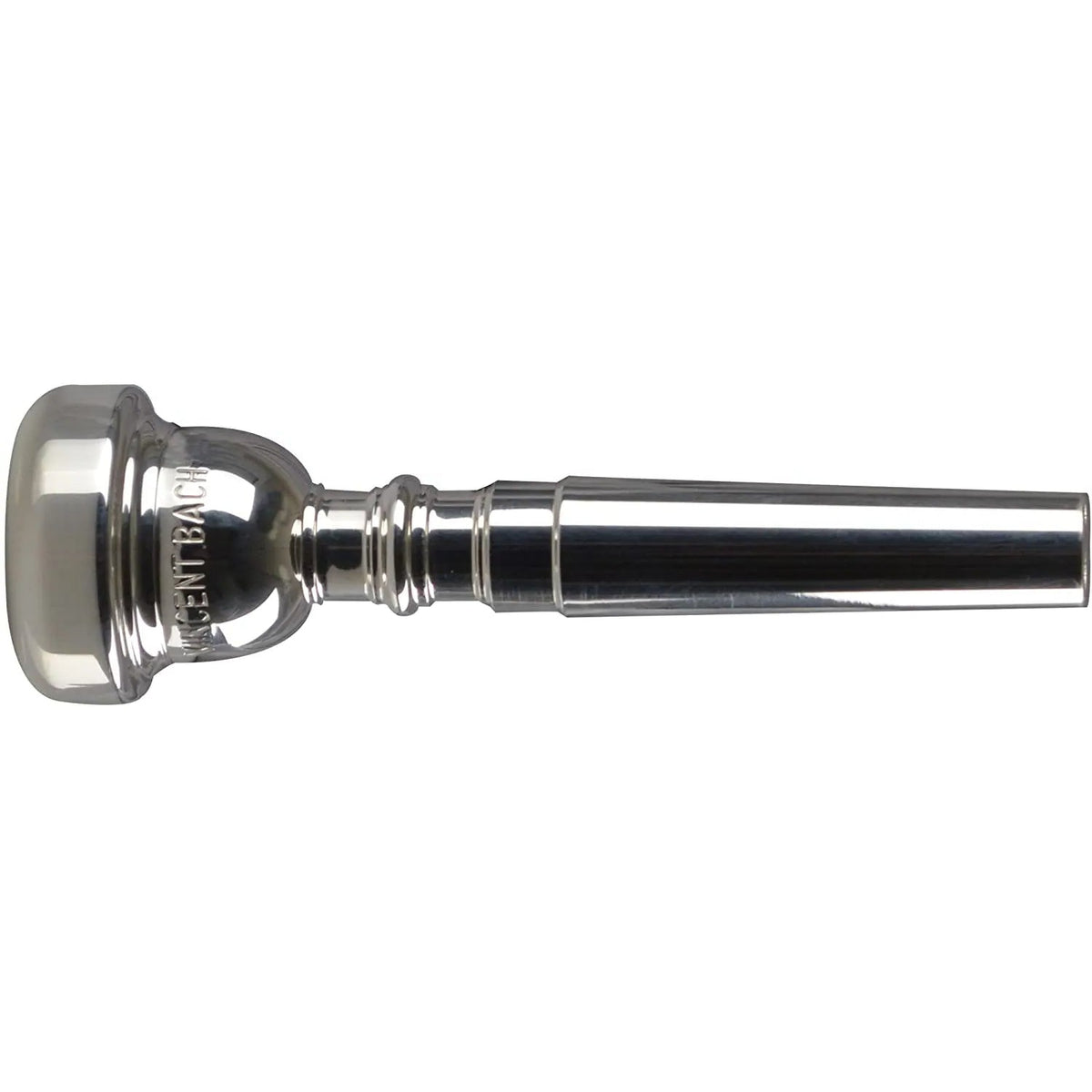
Bach Trumpet Mouthpieces: A Complete Guide to Sizes, Models, and Choosing the Right Fit
Understanding Bach trumpet mouthpiece sizes, cup depths, rim designs, and how they compare with other popular brands.
Choosing the right trumpet mouthpiece can make a significant difference in your playing experience. From tone quality and articulation to endurance, flexibility, and comfort, the mouthpiece is one of the most personal components of a trumpet player's equipment.
For more than a century, Vincent Bach mouthpieces have been an important part of brass playing. Their familiar model designations—such as 7C, 5C, 3C, and 1½C—have become reference points for trumpet players, teachers, and manufacturers around the world.
Yet the Bach numbering system can be confusing, particularly for musicians exploring mouthpieces beyond their first or trying to compare models from different manufacturers.
This guide explains how Bach trumpet mouthpieces are classified, what distinguishes the most popular models, and how to make a more informed choice.
Understanding the Bach Trumpet Mouthpiece Numbering System
Most standard Bach trumpet mouthpieces are identified by a number followed by a letter, such as 3C or 7B.
The two parts of the designation describe different aspects of the mouthpiece.
The Number: Cup Diameter
In the traditional Bach system, lower numbers generally indicate larger cup diameters, while higher numbers indicate smaller diameters.
For example:
| Bach Model | Approximate Cup Diameter |
|---|---|
| 1C | 17.00 mm |
| 1¼C | 17.00 mm |
| 1½C | 17.00 mm |
| 2C | 16.50 mm |
| 3C | 16.30 mm |
| 5C | 16.25 mm |
| 6C | 16.20 mm |
| 7C | 16.20 mm |
| 10½C | 15.90 mm |
Notice that some mouthpieces share the same published cup diameter. For example, the Bach 6C and 7C are both listed at approximately 16.20 mm, yet their different rim contours and cup geometries can make them feel quite different.
Similarly, Bach's 1C, 1¼C, and 1½C share a nominal diameter of 17.00 mm in the referenced catalog. Their differences involve more than the simple diameter measurement.
This illustrates an important principle: cup diameter alone does not determine how a mouthpiece feels or plays.
The Letter: Cup Depth
The letter following the model number generally identifies the cup depth.
| Cup Designation | General Description | Typical Characteristics |
|---|---|---|
| A | Very deep | Full, dark, mellow tone |
| B | Medium deep | Warm, broad sound |
| C | Medium | Balanced, versatile response |
| D | Medium shallow | Brighter response, upper-register support |
| E | Shallow | Brilliant sound, often used for higher trumpet parts |
| F | Extra shallow | Specialized upper-register applications |
The C cup is particularly common because it provides a practical balance of tonal depth, flexibility, and response.
Deeper cups generally favor a broader, more rounded sound, while shallower cups can help produce a brighter tone and support upper-register playing.
However, these are tendencies rather than guarantees. A shallow cup does not automatically give a player more range, and a deep cup does not necessarily produce a better orchestral sound. The results depend on the player, instrument, and complete mouthpiece design.
Popular Bach Trumpet Mouthpiece Models
Although Bach has produced many mouthpiece configurations, several models have become especially familiar to trumpet players.
Bach 7C: A Familiar Starting Point
The Bach 7C is one of the most recognizable trumpet mouthpieces and a common choice for students and developing players.
With a nominal cup diameter of approximately 16.20 mm and a medium-depth C cup, it offers a useful balance of response, tonal quality, and control.
Its characteristics make it suitable for students learning to establish a consistent embouchure, as well as more experienced players who prefer its particular rim and cup design.
Despite its reputation as a student mouthpiece, the 7C is not inherently limited to beginners. Mouthpiece selection is not a progression in which every player must eventually move to a larger size.
Bach 5C: A Versatile Middle Ground
The Bach 5C has a nominal cup diameter of approximately 16.25 mm.
Its medium-depth cup is paired with a relatively rounded, comfortable rim profile. The model has historically been associated with a lively, rich sound.
For players who feel constrained by their current mouthpiece but do not want a substantial increase in cup diameter, the 5C can be a useful model to evaluate.
It is suitable for a wide range of settings, including concert band, orchestral, and general-purpose trumpet playing.
Bach 3C: A Popular All-Around Choice
The Bach 3C is among the most widely recognized models in the Bach lineup.
Its approximately 16.30 mm cup diameter and medium-depth cup provide a combination of tonal fullness, articulation, and flexibility.
The 3C is frequently encountered in symphonic playing, concert bands, brass ensembles, and commercial performance.
Players often appreciate its ability to produce a full sound without requiring an unusually deep cup.
The 3C also demonstrates why mouthpiece selection cannot be reduced to published measurements. The shape of its rim and internal cup profile influence its response just as much as its nominal diameter.
Bach 1½C: A Traditional Large-Diameter Option
The Bach 1½C is a longstanding choice among orchestral trumpeters.
With a nominal cup diameter of 17.00 mm, it offers a substantially different rim and cup experience from the smaller-numbered models discussed above.
It is designed for players who are comfortable with a large-diameter mouthpiece and want a broad, developed sound.
Although frequently associated with advanced orchestral playing, the 1½C is not automatically the best choice for every professional. A player's facial structure, embouchure, and musical demands remain more important than the apparent prestige of a particular size.
Bach 1C and 1¼C: Large Mouthpieces for a Broad Sound
The Bach 1C and Bach 1¼C are both listed with nominal cup diameters of approximately 17.00 mm, but their profiles differ.
Historically, Bach described these models in connection with symphonic, operatic, and solo trumpet playing, particularly where substantial tonal projection and a powerful sound were required.
They may appeal to experienced players who favor a large mouthpiece and have developed the physical coordination to play comfortably on one.
The decision between a 1C, 1¼C, and 1½C should be based on actual playing response rather than diameter specifications alone.
How Cup Depth Changes Trumpet Performance
Two mouthpieces with the same nominal diameter may behave quite differently if their cup depths differ.
Consider the Bach 3 series:
-
3B: A medium-deep cup emphasizing warmth and fullness.
-
3C: A medium cup providing balanced response and versatility.
-
3D: A medium-shallow cup associated with greater brilliance and upper-register support.
-
3E: A shallow cup commonly considered for higher-register work.
-
3F: An extra-shallow cup intended for specialized brilliant, high-register playing.
A player comfortable with the diameter of a 3C but seeking a different tonal character might therefore experiment with another model in the 3 family before changing diameter.
Deeper cups can provide greater tonal breadth but may require a different balance of air and embouchure support. Shallower cups can facilitate a more brilliant tone but may not offer the same depth or flexibility in every register.
The correct selection depends on the musical context and on how efficiently the player can use the equipment.
Why Mouthpiece Rim Shape Matters
While cup diameter and depth receive considerable attention, the rim is equally important.
The rim determines how the mouthpiece contacts the lips, influencing comfort, flexibility, articulation, and the way pressure is distributed.
Important rim characteristics include:
Rim width: Wider rims can distribute pressure over a larger area and may improve comfort for some players, although excessive width can restrict flexibility.
Inner rim contour: A more defined inner edge may provide a feeling of precision and control, while a more rounded contour can feel smoother against the lips.
Outer rim contour: The way the rim falls away toward the outside can influence pressure distribution and overall comfort.
Some Bach models carry a W suffix, indicating a wider cushion-style rim. Examples include the 1CW and 3CW.
These variations allow players to explore different rim characteristics without necessarily changing the basic cup diameter and depth.
Beyond the Cup: Throat and Backbore
The cup is only part of the mouthpiece's internal geometry.
Two other important components are the throat and the backbore.
Throat Diameter
The throat is the narrow passage connecting the cup to the backbore.
A larger throat may allow a greater volume of airflow and can contribute to a more open playing sensation. However, it can also change resistance, articulation, and endurance.
A smaller throat may produce greater perceived resistance and can help some players maintain a centered response.
Neither design is universally superior.
Backbore Design
The backbore is the internal passage that expands from the throat toward the mouthpiece shank.
Its taper influences resistance, intonation, response, and tonal characteristics.
Two mouthpieces with similar cup dimensions can behave very differently if their backbores differ substantially.
For this reason, players comparing Bach mouthpieces with models from other brands should not assume that similar rim measurements mean identical performance.
Choosing a Bach Mouthpiece for Your Musical Needs
Different musical settings can place different demands on a trumpet mouthpiece.
| Playing Situation | Models Worth Exploring | Considerations |
|---|---|---|
| Beginning and developing players | 7C, 5C | Comfortable fit, consistent response, control |
| General concert band | 7C, 5C, 3C | Balanced tone and flexibility |
| Orchestral playing | 3C, 1½C, 1¼C, 1C | Broad tone, projection, blending |
| Jazz and commercial playing | 5C, 3C, selected D/E cups | Articulation, tonal color, flexibility |
| Lead trumpet | D, E, or F cup variations | Brilliance and upper-register efficiency |
| Piccolo or soprano trumpet | Selected shallow-cup models | Response, register, sound requirements |
These are starting points for comparison, not fixed assignments. Excellent players use a wide variety of equipment across all musical styles.
A player performing both orchestral and commercial music may prefer a single versatile mouthpiece, while another may use different configurations for distinct musical demands.
Common Mistakes When Choosing a Trumpet Mouthpiece
One frequent mistake is assuming that a larger mouthpiece is inherently more professional. Larger cups can be highly effective for some players, but they can also create unnecessary challenges when they do not match the player's embouchure.
Another is choosing an extremely shallow mouthpiece solely to increase range. High-register performance depends on technique, efficiency, and conditioning—not simply on reducing cup depth.
A third mistake is judging equipment exclusively by published dimensions.
The same measured diameter can feel different because of rim shape, cup entrance, and the location at which the diameter is measured.
Finally, changing mouthpieces too frequently can make it difficult to evaluate the benefits of a particular design. A new mouthpiece should be assessed over a reasonable period, across a variety of musical demands, rather than on the basis of a few isolated high notes.
Comparing Bach Mouthpieces with Other Brands
Bach model numbers have become convenient reference points throughout the trumpet world. Many manufacturers produce mouthpieces with approximate dimensional or functional similarities to familiar Bach models.
However, there is no universal sizing standard across manufacturers.
A mouthpiece described as comparable to a Bach 3C may have a different rim contour, cup volume, throat, backbore, or overall playing sensation.
Brand-to-brand charts are therefore most useful for identifying potential starting points, rather than exact substitutes.
When exploring alternatives, compare the physical fit and performance of each mouthpiece under realistic playing conditions. Consider tone, articulation, intonation, endurance, flexibility, and comfort.
 Final Thoughts
The popularity of Bach trumpet mouthpieces reflects both their long history and the extensive variety of designs available to players.
From the familiar 7C and versatile 3C to the larger 1½C and 1C, the Bach lineup provides many options for players seeking different combinations of tonal character, comfort, and response.
The most important factor is not whether a mouthpiece is considered a student, intermediate, or professional model. It is whether the mouthpiece enables the musician to perform with efficiency, confidence, and the desired musical sound.
At The Mighty Quinn Brass and Winds, we encourage trumpet players to approach mouthpiece selection as a matter of individual fit rather than a simple progression toward larger or more specialized equipment.
An understanding of Bach's sizing system provides an excellent foundation for that process—and a useful reference when comparing mouthpieces from other respected manufacturers.
Find it. Play it. Love it. ♪♫
Share:
How to Choose Your Trumpet: From Beginner to Pro
Laskey Trumpet Mouthpiece Sizes and Comparison Chart