
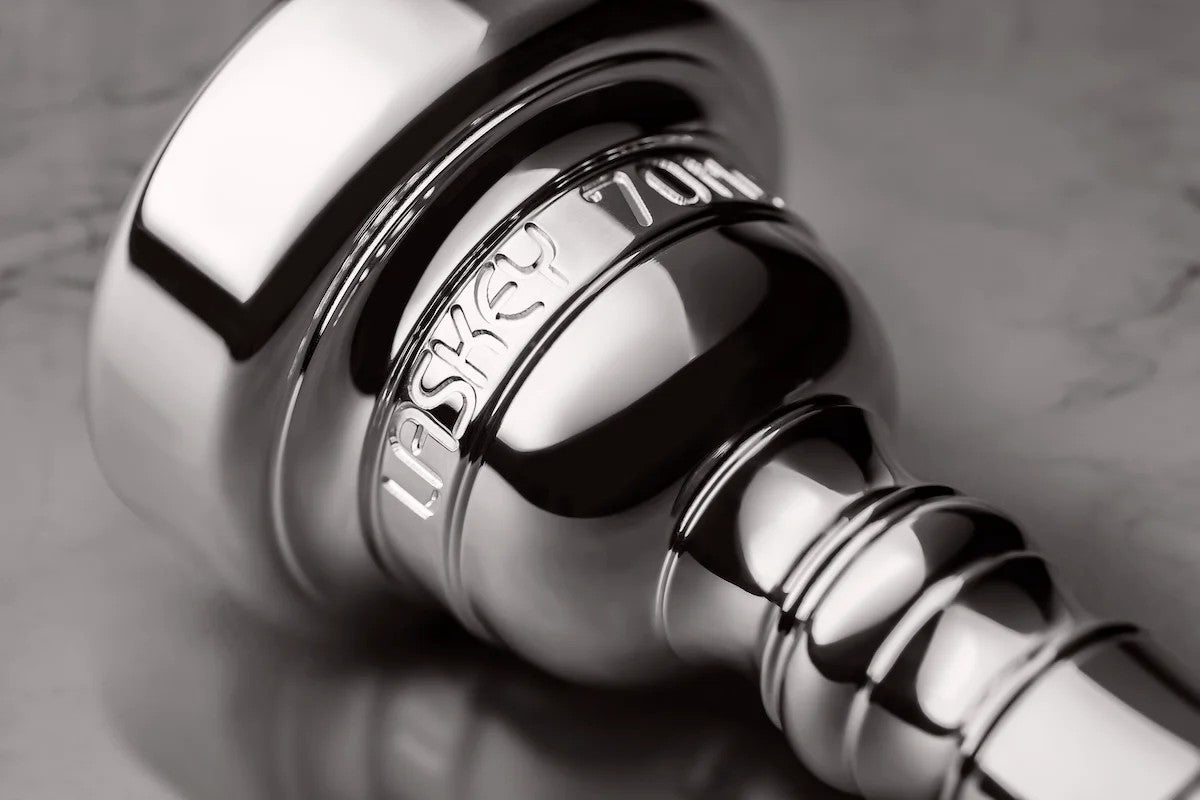
Laskey Trumpet Mouthpieces: A Complete Guide to Models, Sizes, and Choosing the Right Fit
Explore the Laskey Classic and Protégé trumpet mouthpiece collections, understand their distinctive sizing system, and discover how they compare with other leading mouthpiece brands.
Choosing the right trumpet mouthpiece is one of the most important decisions a brass player can make. A well-matched mouthpiece can improve comfort, response, articulation, endurance, and tonal consistency, allowing musicians to concentrate more fully on their performance.
Among the many mouthpiece manufacturers available today, Laskey has earned a reputation for thoughtfully engineered designs that combine precise manufacturing with exceptional attention to the player's experience.
Originally developed by renowned mouthpiece craftsman Scott Laskey, these designs have become popular with trumpet players seeking a combination of comfort, tonal richness, and reliable response.
Today, the Laskey trumpet mouthpiece lineup includes two principal collections: the Classic Series, offering an extensive selection of rim diameters and cup configurations, and the Protégé Series, designed specifically for beginning and developing trumpet players.
Understanding the differences between these collections—and the meaning of Laskey's distinctive model numbers—can help musicians find a mouthpiece that complements their individual playing characteristics.
The History Behind Laskey Trumpet Mouthpieces
Scott Laskey began developing his expertise in mouthpiece design during the late 1970s, studying and modifying established mouthpieces before creating his own designs.
His work focused on how the geometry of a mouthpiece influences its playing characteristics. Rim contour, cup shape, throat configuration, backbore, and exterior mass all received careful attention.
Over time, the Laskey trumpet mouthpiece collection evolved through several generations.
When the modern Classic Series was reintroduced, the company examined Scott Laskey's historical design files and surviving physical mouthpieces to identify and reproduce the most refined versions of his work.
The resulting designs primarily reflect Laskey's third generation of mouthpiece development.
Modern CNC manufacturing provides consistent machining, while coordinate measuring technology was used to compare historical mouthpieces with their digital design specifications.
The objective was to preserve the character of Scott Laskey's original work while achieving repeatable manufacturing precision.
Understanding the Laskey Trumpet Mouthpiece Numbering System
Unlike the traditional Bach numbering system, in which smaller numbers generally indicate larger mouthpieces, Laskey uses ascending numbers to identify progressively larger rim sizes.
A typical Laskey Classic mouthpiece designation combines a number and a letter, such as 65C, 70MC, or 80MD.
The number identifies the approximate rim-diameter family, while the letters identify the cup configuration.
The Number: Rim Diameter
The Classic Series includes ten principal rim sizes.
| Laskey Rim Size | Approximate Diameter |
|---|---|
| 30 | 16.00 mm |
| 40 | 16.25 mm |
| 50 | 16.51 mm |
| 60 | 16.76 mm |
| 65 | 16.89 mm |
| 68 | 16.96 mm |
| 70 | 17.01 mm |
| 75 | 17.14 mm |
| 80 | 17.27 mm |
| 84 | 17.37 mm |
Approximate rim-diameter groupings from the Laskey comparison reference.
The increasing numbers make it relatively straightforward to identify the direction of a size change.
A player using a Laskey 65C who wants to explore a slightly larger rim might evaluate a 68C or 70C, while a player seeking a smaller rim could explore a 60C.
However, diameter is only one aspect of the playing experience.
Laskey Classic mouthpieces feature a carefully contoured rim with a subtle high point near the inner rim edge. This distinctive geometry influences how the mouthpiece contacts the lips and can make two mouthpieces with similar published diameters feel quite different.
The Letters: Cup Design
Laskey's cup designations identify seven distinct approaches to cup geometry.
| Cup Series | Cup Characteristics | Typical Applications |
|---|---|---|
| ES | Extra shallow | Extreme high register, piccolo and soprano trumpet |
| S | Medium shallow | Lead trumpet, commercial playing, upper-register work |
| MC | Moderately shallow double-cup design | Versatile playing with a rich tonal core |
| C | Traditional medium-depth cup | General-purpose, orchestral, and commercial playing |
| MD | Medium deep | Broad, dark sound and large ensemble playing |
| B | Concave funnel-shaped cup | Dark, full tone with responsive projection |
| D | Deep bowl with large cup volume | Powerful, broad orchestral sound |
One important distinction is that Laskey's cup letters do not always correspond directly with the terminology used by other manufacturers.
For example, the Laskey B and D cups have distinct shapes and playing characteristics and should not be interpreted simply as equivalents to similarly named Bach cups.
Exploring the Laskey Classic Trumpet Mouthpiece Series
The Classic Series offers mouthpiece designs for a broad range of musical applications, from piccolo trumpet and lead playing to symphonic performance.
Laskey ES Series: Extra-Shallow Cup
The ES Series features the shallowest cup configuration in Scott Laskey's original trumpet mouthpiece catalog.
Its exceptionally shallow design incorporates a softened transition into the throat, intended to maintain a brilliant tone while supporting efficient upper-register response.
The ES Series is particularly suited to piccolo trumpet and Eb/D soprano trumpet applications, where clarity, brilliance, and reliable articulation are important.
It may also appeal to players whose musical responsibilities require sustained work in the extreme upper register.
Examples include the 50ES, 60ES, 65ES, and 70ES.
Laskey S Series: Medium-Shallow Cup
The S Series provides a somewhat deeper alternative to the ES design.
Its medium-shallow cup seeks to balance brilliance with a fuller tonal character, making it useful for jazz, lead trumpet, commercial performance, and soprano trumpet applications.
Players who find an extra-shallow mouthpiece too specialized may appreciate the additional flexibility of the S Series.
The 60S, 65S, and 70S are examples worth considering when exploring this style of mouthpiece.
Laskey MC Series: The Double-Cup Design
One of the most distinctive offerings in the Classic lineup is the MC Series.
Rather than relying on a conventional single cup contour, the MC incorporates two interacting cup regions.
The first portion, immediately inside the rim, has a moderately shallow profile that supports comfort and response.
The second portion, nearer the throat, provides additional depth and internal volume.
This double-cup geometry is designed to produce a rich tonal core while preserving some of the responsiveness associated with shallower designs.
For trumpet players who need both tonal substance and flexibility, the MC Series offers an especially interesting alternative to conventional cup shapes.
Popular models to explore include the 65MC, 68MC, 70MC, and 75MC.
Laskey C Series: The Versatile All-Around Choice
The Laskey C Series is built around a traditional medium-depth trumpet cup.
Its balanced design is intended to deliver a centered tone and dependable response across a wide range of musical situations.
This makes the C Series appropriate for orchestral, concert band, chamber music, jazz, and general commercial performance.
A musician who performs several different styles and prefers to use a single mouthpiece may find the C Series an excellent starting point.
The 60C, 65C, 70C, and 75C are useful sizes to compare, depending on the player's preferred rim diameter.
Laskey MD Series: Medium-Deep Cup
The MD Series occupies the space between the traditional C cup and the substantially deeper D design.
Its medium-deep geometry emphasizes a broad, rich tonal character while preserving the response and projection needed for demanding ensemble playing.
The MD Series may be particularly attractive to orchestral and concert band trumpeters seeking additional warmth and depth without immediately moving to the largest available cup volumes.
Models such as the 65MD, 68MD, 70MD, and 75MD provide different rim sizes within this tonal concept.
Laskey B Series: The Concave Funnel Cup
The B Series uses a distinctive concave, funnel-like internal cup shape.
Unlike a traditional bowl-shaped mouthpiece, this geometry creates a different progression from the rim toward the throat.
The design is intended to produce a full, dark sound while maintaining responsive articulation and strong projection.
For musicians who favor a warm, expansive tonal character, the B Series provides an alternative to conventional medium and deep bowl cups.
The 65B, 70B, 75B, and 80B are among the available configurations.
Laskey D Series: Deep Cup for Maximum Tonal Breadth
The D Series features a deep, large-volume bowl reminiscent of traditional oversized trumpet mouthpiece designs.
It is intended for players with a developed embouchure who seek substantial tonal breadth, power, and projection.
The additional cup volume can support a particularly expansive sound, although the demands of such a mouthpiece may not suit every player.
For experienced trumpeters who are comfortable with large mouthpieces and prioritize a powerful symphonic sound, the 80D and 84D are worth investigating.
The Most Popular Laskey Classic Mouthpieces
With so many combinations of rim size and cup depth, choosing a starting point can seem complicated.
Fortunately, Laskey identifies the 65 and 70 rim sizes paired with MC or C cups as some of the most popular combinations in its catalog.
These four models illustrate the versatility of the Classic Series:
| Model | Principal Characteristics |
|---|---|
| 65C | Medium cup with a balanced rim size for versatile performance |
| 65MC | Double-cup design providing responsive playing and tonal richness |
| 70C | Larger rim with a traditional medium cup |
| 70MC | Larger rim combined with the distinctive MC double-cup profile |
These models can serve as practical reference points for experienced players comparing Laskey mouthpieces with their existing equipment.
However, their popularity does not make them universally appropriate. The ideal choice depends on individual anatomy, playing technique, and musical requirements.
Laskey Protégé Trumpet Mouthpieces: Designed for Developing Musicians
While the Classic Series provides an extensive range of configurations, the Laskey Protégé Series takes a more focused approach.
Developed for beginning and emerging trumpet players, the Protégé collection emphasizes comfort, stability, consistent airflow, and balanced flexibility.
Rather than offering dozens of model combinations, the series concentrates on three familiar sizes.
The Three Laskey Protégé Models
| Protégé Model | Approximate Bach Equivalent | Suggested Starting Point |
|---|---|---|
| Protégé 7 | Bach 7C | Beginning and developing players |
| Protégé 5 | Bach 5C | Students exploring a different rim fit |
| Protégé 3 | Bach 3C | Advancing players who prefer a larger fit |
These equivalencies provide a familiar reference for musicians and educators accustomed to the Bach numbering system.
However, equivalency does not mean the mouthpieces have identical rim profiles, cup shapes, or playing characteristics.
What Makes the Protégé Series Different?
Laskey engineered the Protégé Series with particular attention to the relationship between cup and throat dimensions.
This balance is intended to promote consistent airflow and a flexible response throughout the trumpet's range.
The mouthpieces are manufactured from 360 free-machining brass, with a distinctive two-tone exterior treatment.
The rim is polished to provide a smooth playing surface, while the body retains a satin appearance.
The Protégé Series also uses a three-stage plating process consisting of copper, silver, and a final bright-silver layer.
Together, these features provide developing players with a carefully manufactured mouthpiece without requiring them to navigate the extensive customization options of the Classic lineup.
Laskey Classic vs. Protégé: Which Should You Choose?
The two collections serve somewhat different needs.
| Feature | Classic Series | Protégé Series |
|---|---|---|
| Intended audience | Developing through professional players | Beginning and advancing students |
| Rim selection | 10 principal sizes | 3 models |
| Cup configurations | 7 distinct designs | Fixed configurations |
| Sizing system | Laskey numerical system | Familiar 3, 5, and 7 designations |
| Finish options | Silver or gold plating | Silver-plated with two-tone satin/polished treatment |
| Primary advantage | Extensive choice of rim and cup combinations | Simplicity, comfort, and accessibility |
The Protégé Series offers a straightforward starting point, particularly for students who might otherwise begin on a traditional Bach 7C, 5C, or 3C.
The Classic Series provides greater flexibility for musicians who know what they want from a mouthpiece and are interested in exploring different rim diameters and cup shapes.
Importantly, the Protégé Series should not be viewed merely as a temporary or inferior option. A mouthpiece that fits well and supports efficient playing remains valuable regardless of the player's experience level.
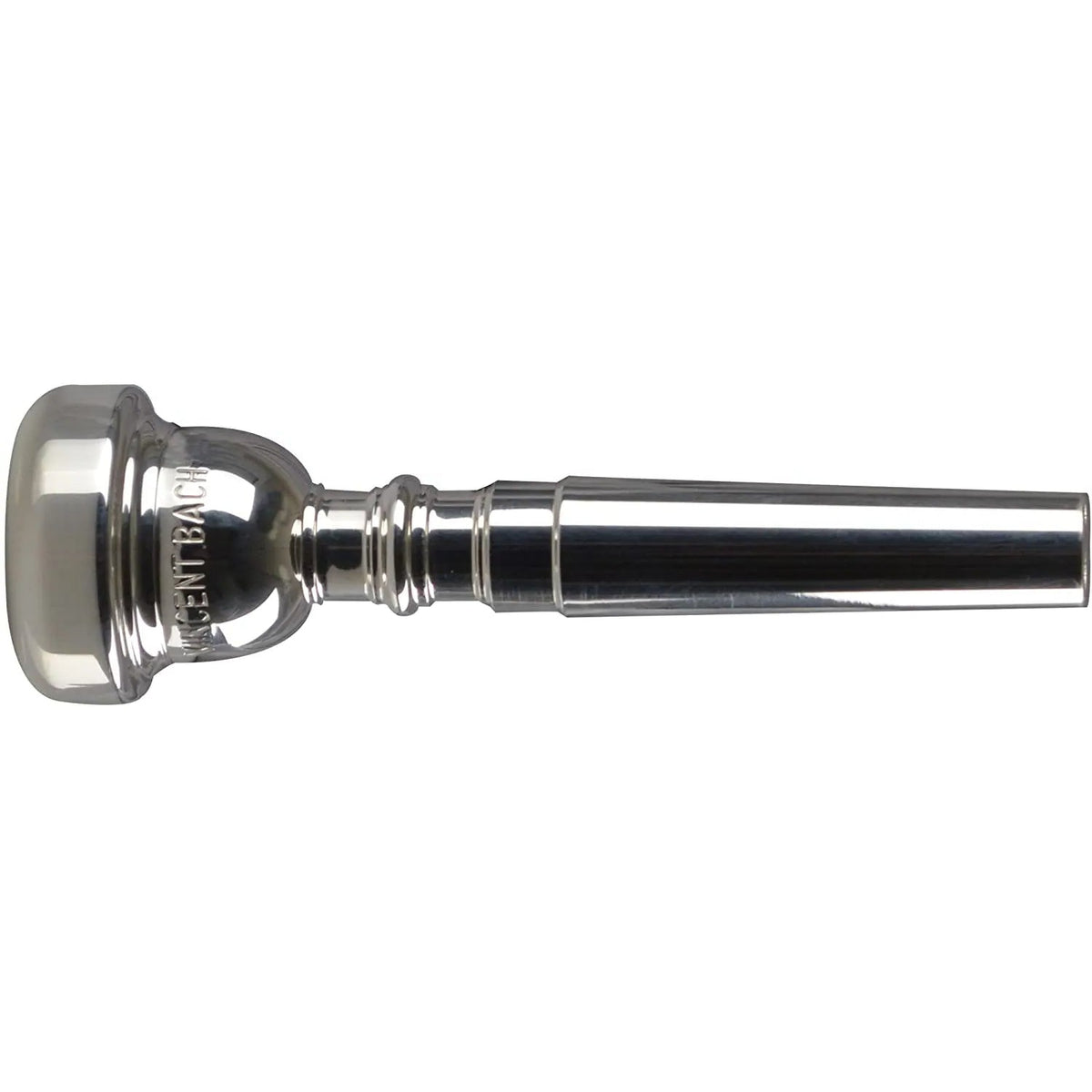
How Laskey Mouthpieces Compare with Bach
Because Bach mouthpieces have historically served as a widely recognized reference in trumpet equipment, many players begin their Laskey search by identifying the model closest to their existing Bach mouthpiece.
For example, a player accustomed to a Bach 7C may wish to compare Laskey mouthpieces around the same general rim-size category.
Likewise, someone comfortable with a Bach 3C might begin by exploring the Laskey 70 family, while also considering adjacent rim sizes.
One major difference between the brands is their approach to numbering.
Bach generally uses smaller numbers for larger mouthpieces, whereas Laskey's numbers increase with rim diameter.
Another difference is the range of cup designs available. Laskey's MC double-cup and B funnel-style geometries provide alternatives to conventional cup designs.
Comparing mouthpieces across brands should always involve more than looking at a size chart.
A successful comparison considers cup volume, rim contour, throat and backbore geometry, resistance, intonation, and the player's individual response.
 Choosing a Laskey Mouthpiece for Different Playing Styles
The following recommendations provide starting points for players exploring the Laskey lineup.
| Musical Application | Models to Explore |
|---|---|
| Beginning trumpet | Protégé 7, 5, or 3 |
| General concert band | 60C, 65C, 70C |
| Orchestral trumpet | 70C, 70MD, 75MD, 80B |
| Jazz and commercial playing | 60MC, 65MC, 70MC |
| Lead trumpet | 50S, 60S, 65S |
| Piccolo and soprano trumpet | 50ES, 60ES, 65ES |
| Large, dark symphonic sound | 75B, 80B, 80D, 84D |
These recommendations are exploratory rather than prescriptive. Mouthpiece choice is highly individual, and a player's technique and comfort should always guide the final decision.
Final Thoughts
Laskey trumpet mouthpieces combine Scott Laskey's extensive design experience with modern manufacturing precision.
The Classic Series provides a particularly broad selection of rim sizes and cup geometries, allowing musicians to tailor their equipment to their playing preferences.
Its distinctive MC double-cup, B funnel-style cup, and carefully developed traditional cup designs offer a range of tonal and response characteristics.
Meanwhile, the Protégé Series brings Laskey's design philosophy to beginning and developing musicians through three accessible configurations.
Whether you are a student looking for your first quality mouthpiece, a jazz musician refining your upper-register equipment, or an orchestral trumpeter seeking greater tonal depth, the Laskey lineup offers many possibilities worth exploring.
At The Mighty Quinn Brass and Winds, we encourage musicians to approach mouthpiece selection as an individual process, focusing on comfort, tonal quality, response, and musical versatility rather than model numbers alone.
The right mouthpiece should make playing feel more natural while helping you achieve the sound you envision.
Find it. Play it. Love it. ♪♫
Share:
Bach Trumpet Mouthpiece Sizes and Comparison Chart