They’re similar … but also very distinct.
If you’ve ever watched a horn section onstage, you may have noticed that the sax players are sometimes playing different-sized instruments, even ones that have different shapes. On occasion, they even swap out their saxes from song to song.
Ever wonder why? If you guessed it’s because each type of saxophone makes a slightly different sound, you’d be right, but the differences don’t end there. In this article, we’ll take a closer look at what differentiates the four most common types of saxophones, but first let’s talk a little about the history of this fascinating and exceptionally versatile instrument.
Origins
Invented by Belgian musician Adolphe Sax (hence: saxophone) in 1846, the original idea was to create an instrument that would bridge the sonic gap between brass instruments and woodwinds. Indeed, the saxophone is the only woodwind made of brass, yet it uses a reed mouthpiece.
At first, there were as many as 16 varieties of saxophone, which were primarily found in orchestras and used to play classical music. Today, there are only a few types in common use — predominantly the soprano, alto, tenor and baritone — and the instrument more often plays a role in contemporary jazz and rock, where it is typically used for soloing as well as main melody and underpinning.
Similarities
For starters, all saxophones, regardless of type, are conical, meaning their tubes or bodies widen from the mouthpiece to the end of the instrument. What’s more, each of their tubes blossom into a bell-like shape at the end of the horn — a part known, fittingly enough, as the bell.
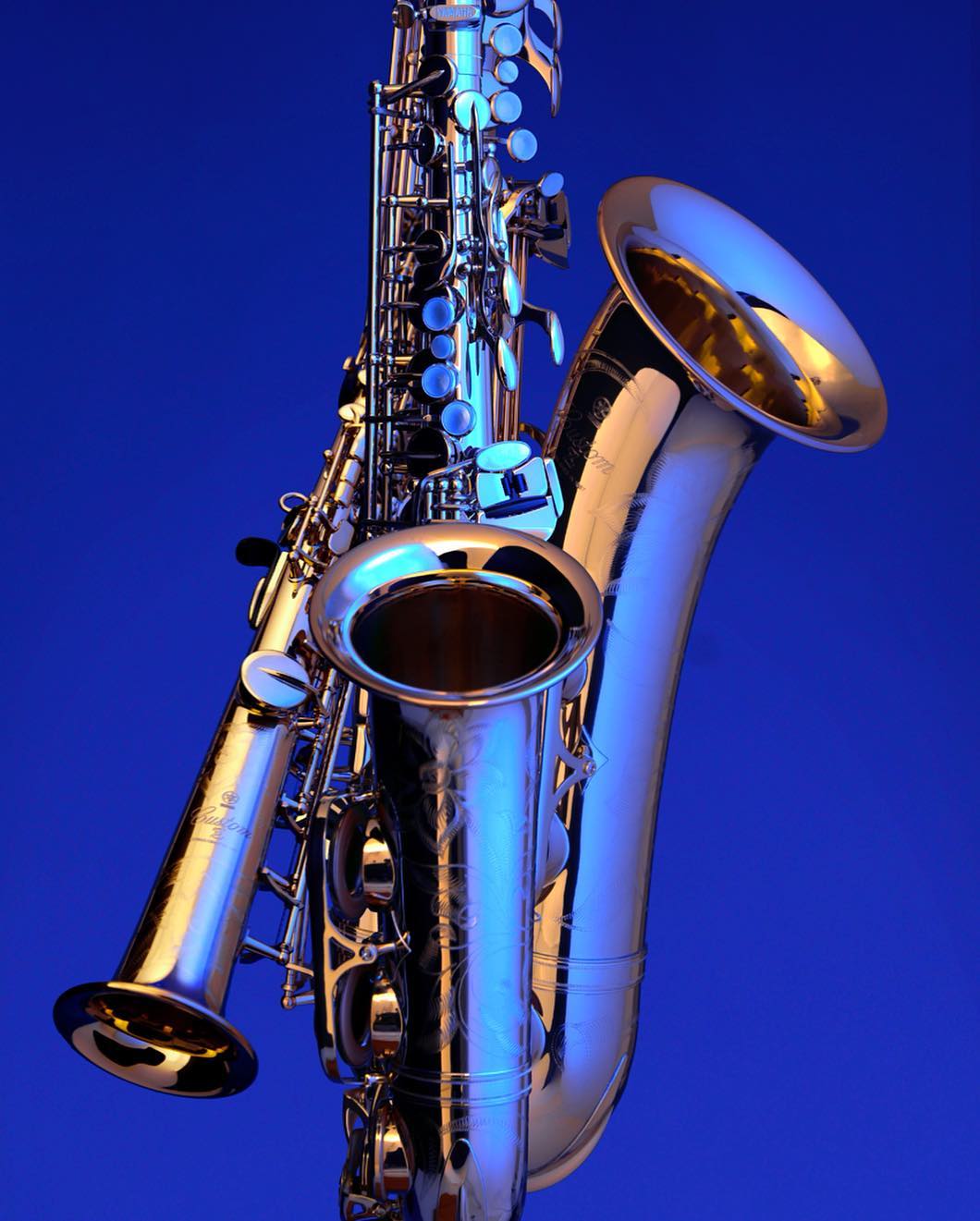
In addition, the keys on soprano, alto, tenor and baritone saxophones are all essentially the same. A baritone sax may have one extra key for a lower note, or a soprano may have one more for a higher note, but anyone familiar with one type of saxophone can play the others.
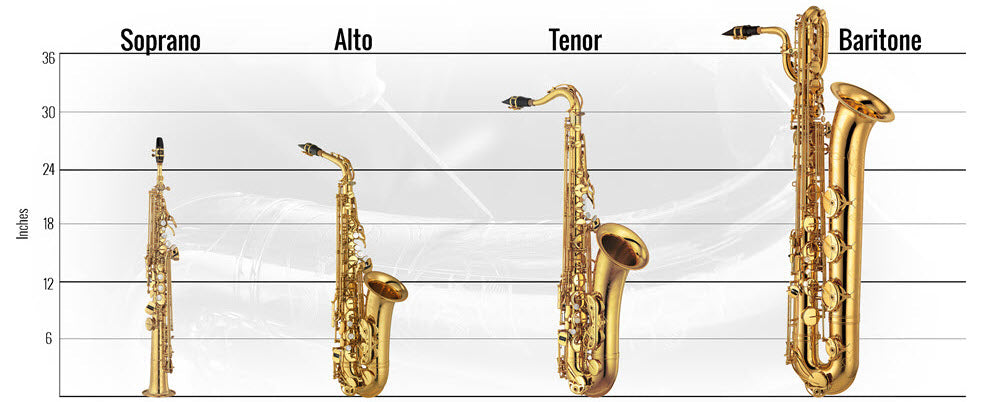
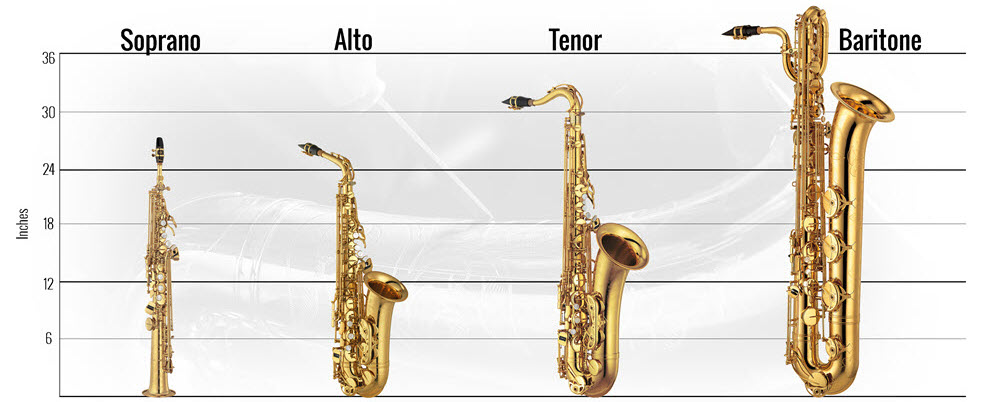
But this is where differences begin to emerge. Whereas a piano has 88 keys, and therefore a large range of notes, a saxophone has fewer possibilities, which is why there are several options available. And since, as shown in the illustration below, each varies in size, their pitch range and breath and force requirement changes as well. As with vocalists, soprano designates the highest voice, alto the next highest, then tenor, followed by baritone.
Soprano Saxophone
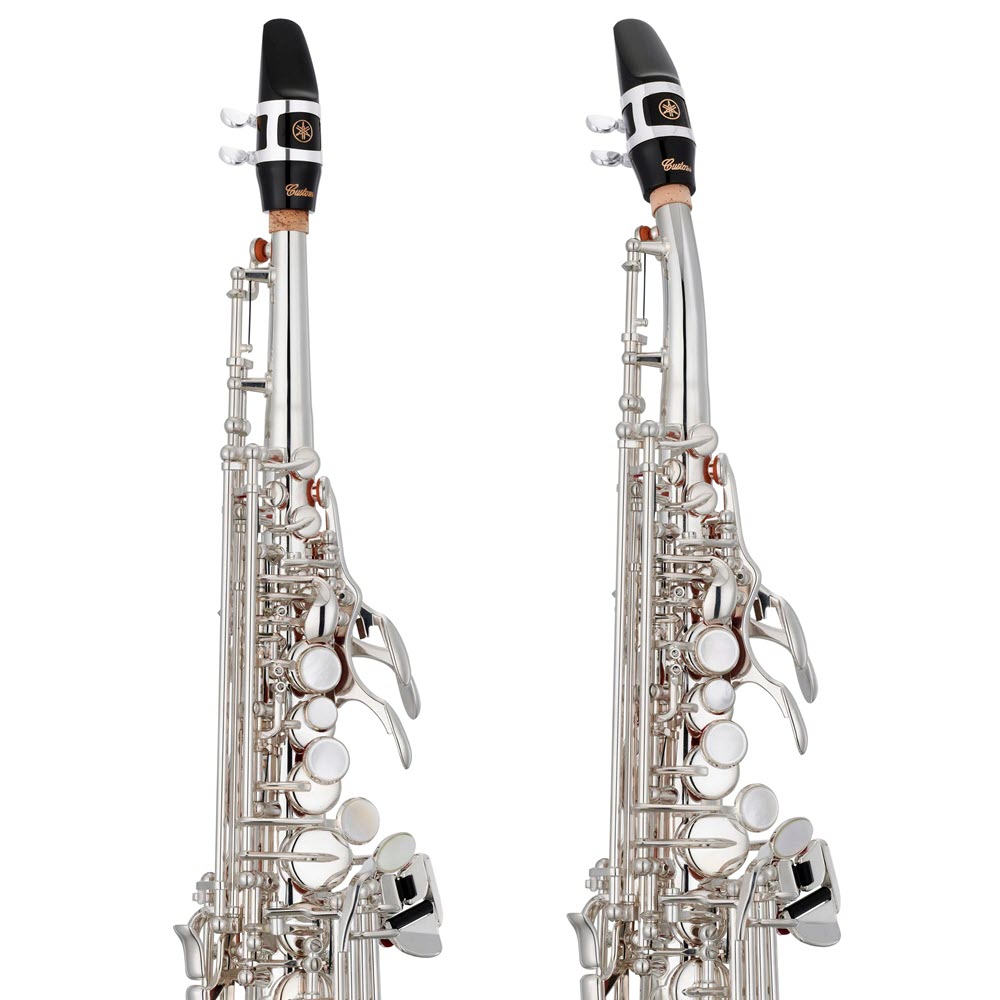
The soprano saxophone is the smallest (and lightest in weight) of the four types and therefore offers the highest pitch. For this reason, it is more sensitive and thus harder to keep in tune than the other three types. Soprano saxes are usually tuned to the key of B-flat, which is the same tuning as many other orchestral instruments, including the trumpet.
Additionally, as fans of contemporary smooth jazz may have noticed, most soprano saxophones are, unlike their three cousins, are straight, not curved. Some modern soprano saxes (such as Yamaha YSS-82ZR models) feature curved necks, allowing the player to adopt a more traditional playing stance and embouchure (mouth position), rather than the downward-looking position the straight soprano sax requires. There are even some soprano saxophones with curved bells, which make them look like an especially small version of their bigger cousins.
Alto Saxophone
Alto saxophones, which are nearly always tuned to the key of E-flat, are the next biggest in size and the next highest in pitch. Unlike the straight-shaped soprano, the alto saxophone is shaped like the letter “J.” Tenor and baritone saxes are also J-shaped but the neck of the alto is bent straight at an almost 90-degree angle.
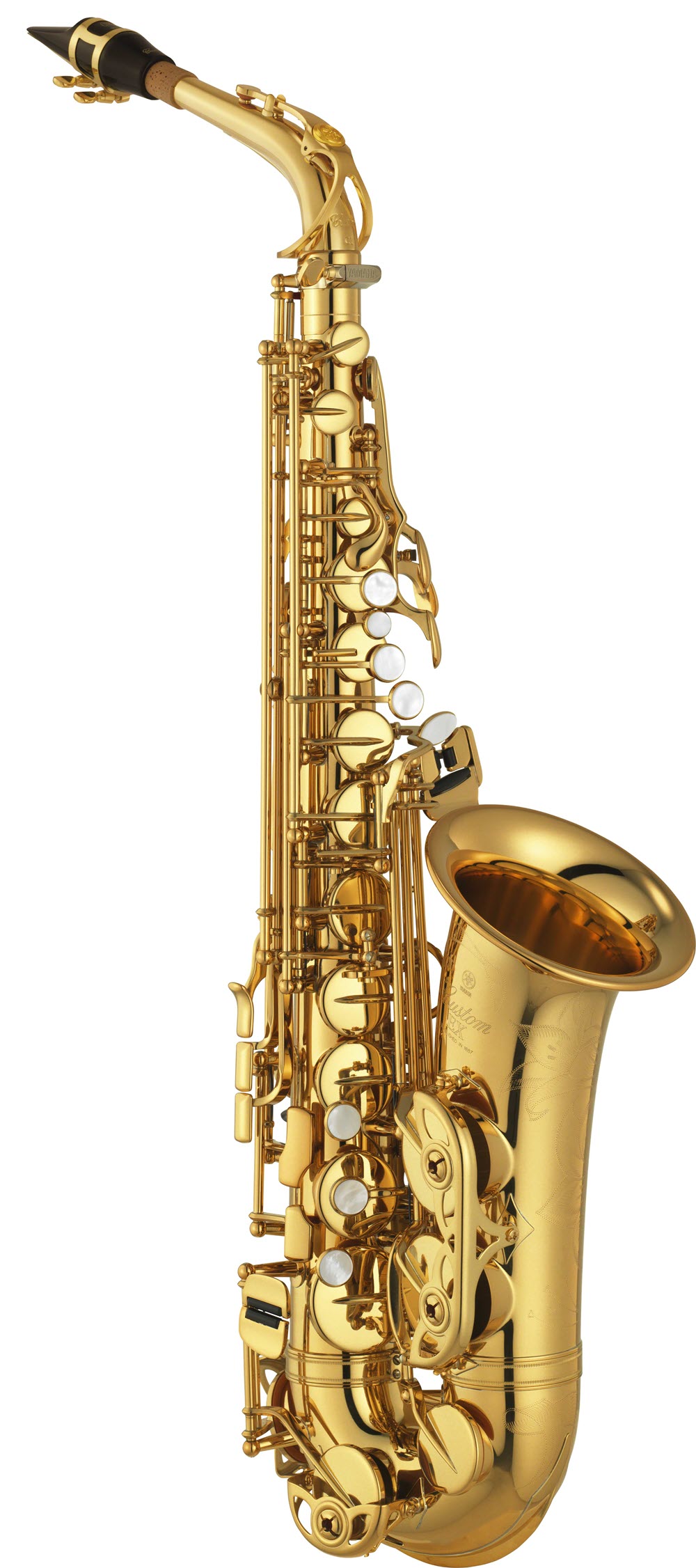
The curve in the alto saxophone neck gives the tube more length. This not only extends the pitch range downward but also deepens the sound. For a more extreme example of this, consider a tuba, which is very big and has many twists in both its neck and body.
Tenor Saxophone
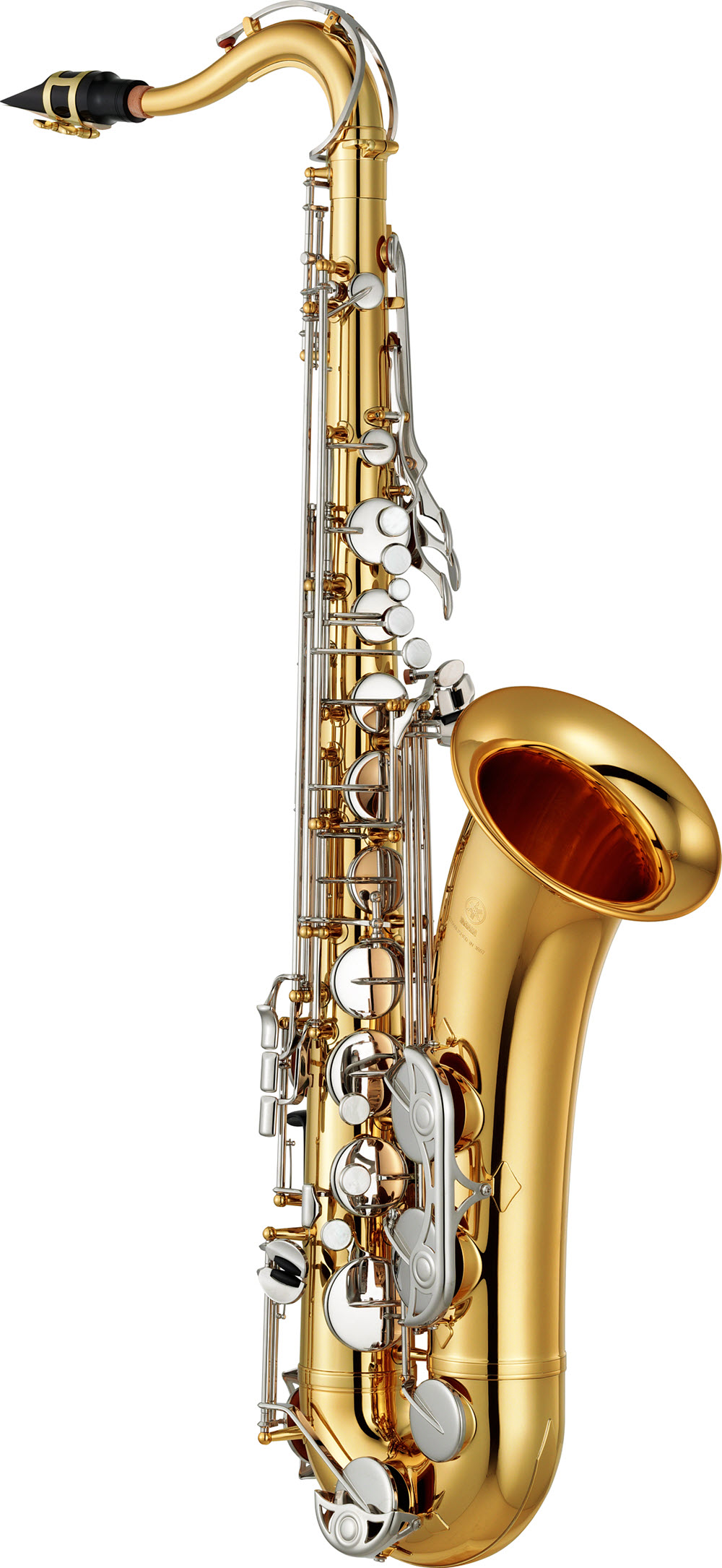
The tenor saxophone, which is the next largest in size and next lower in pitch, is the most commonly played type of sax in popular music. It uses a larger mouthpiece and reed than the soprano or alto and is nearly always tuned to the key of B-flat. As exemplified by the playing of legendary musician John Coltrane, the tenor sax has enjoyed long-standing popularity, from the inventive jazz of the 1940s to the bebop and honking rock’n’roll of the ’50s, all the way to the contemporary rock and R&B enjoyed by millions today.
Baritone Saxophone
The baritone saxophone, which is tuned to the key of E-flat, is the largest and heaviest of the four. To help extend the body of the baritone sax and allow for the lowest pitch possible, the top of the neck incorporates a twist, or “curly-q” — a feature not found in any of the other saxophone types.
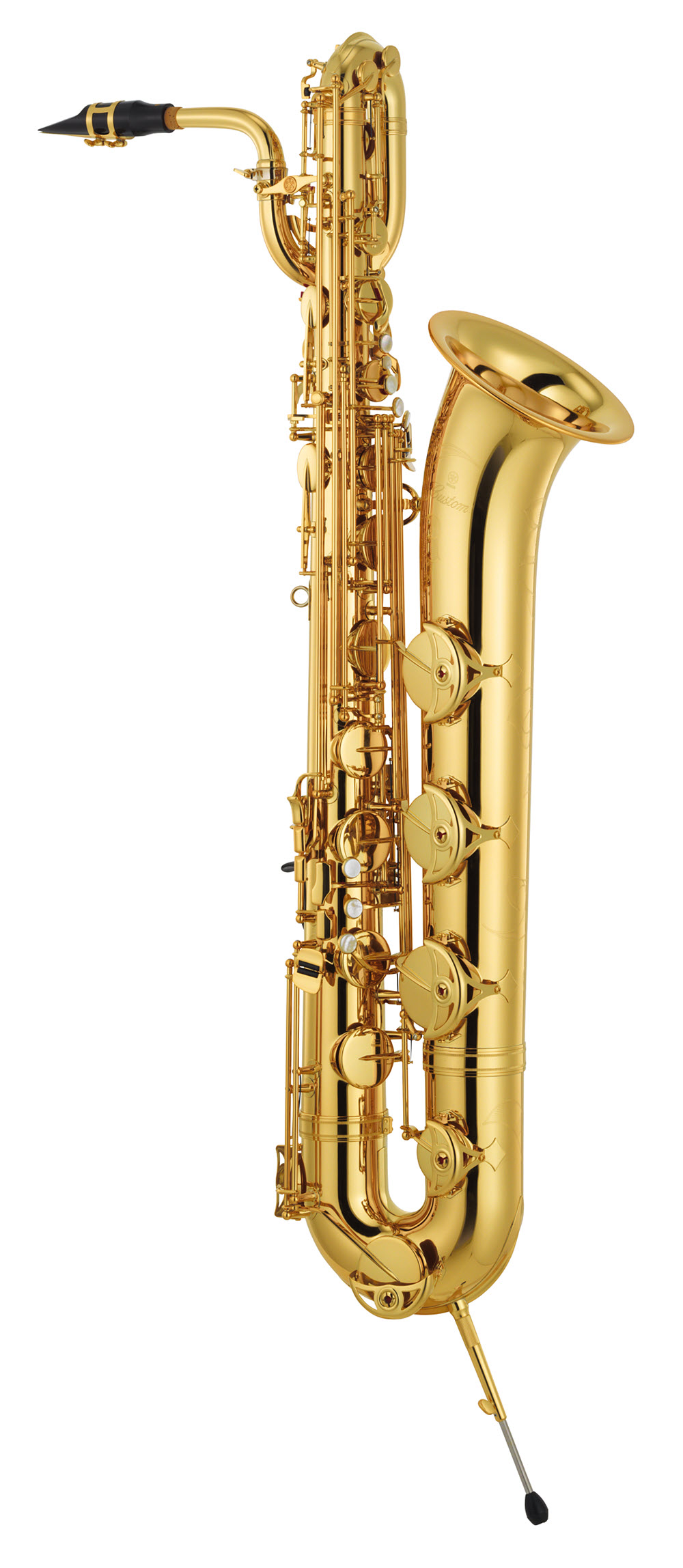
Because of their large size and very long neck length, baritone saxes require the most lung power and an especially “open” (that is, relaxed) embouchure to enable the low rumble of its imposing tonality. Despite this, more and more young musicians are gravitating to baritone sax, especially since modern craftsmanship has helped make beginner models such as the Yamaha YBS-480 lighter and easier to play.
Written by Jake Uitti
Share:
How to Care for Your Saxophone: A Simple Guide for Beginners
What’s the Difference Between Baritone Horn and Euphonium?