I don't have a strong background in esoteric instruments, which is part of what makes working at The Mighty Quinn so interesting for me. Every now and again, we receive an item in at the shop that just completely stumps me. (HEY! I'm looking at YOU, soprano trombone!)
So I dug in and did a little 007-type investigating, and here is what I learned. Hopefully this short little write up will be interesting to musical experts and novices alike.

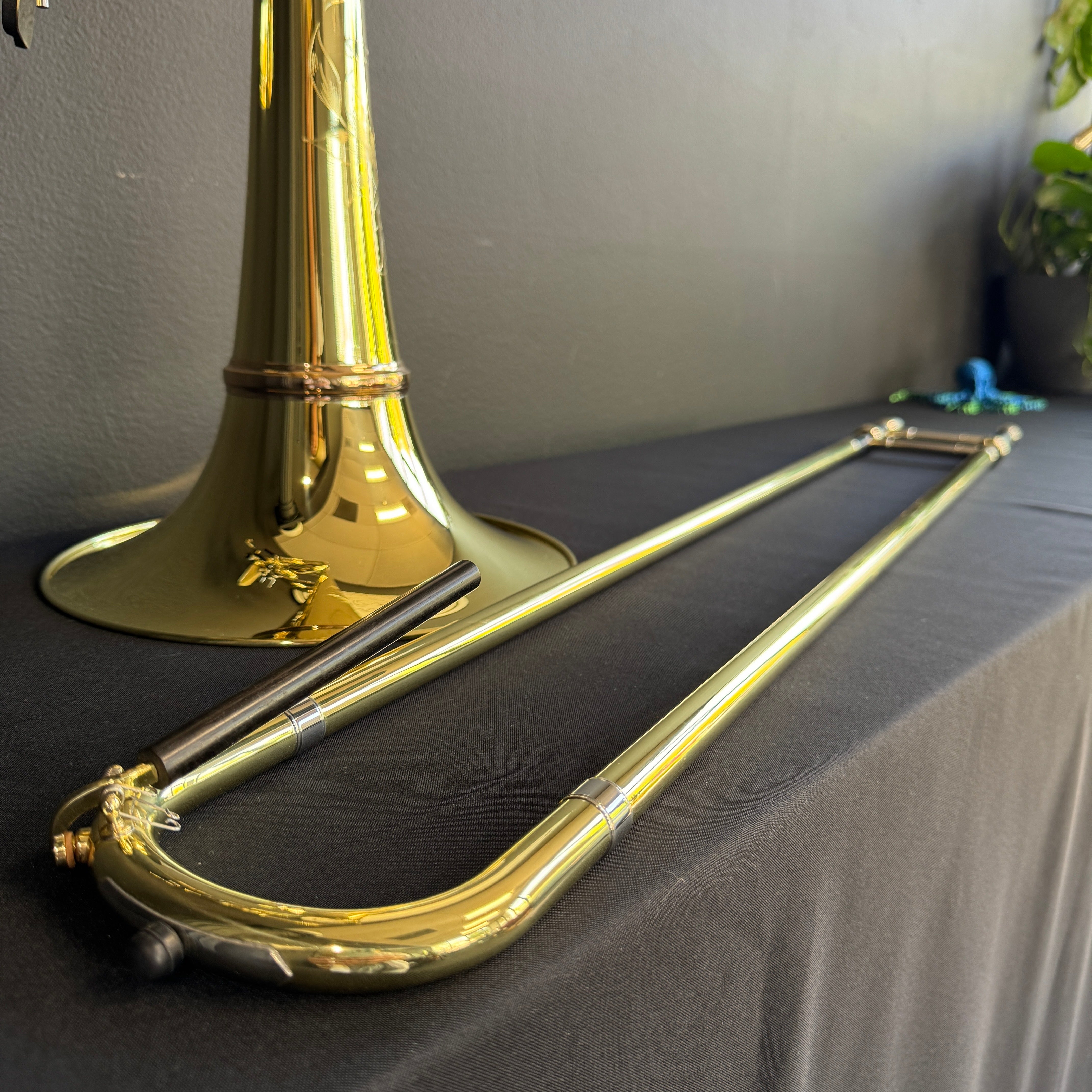
Pitched at the same range as the Bb trumpet, one octave above the tenor trombone, the soprano trombone/mini trombone/slide trumpet has a very similar tone to a standard Bb valve trumpet. Indeed, the early Renaissance slide trumpet was essentially a natural trumpet with a sliding leadpipe. Music for this instrument is written as if it were to be played by a trumpeter rather than a trombonist.
This type of instrument was developed in the late 17th century, although its place in 17th Century classical music is somewhat disputed. By the late 18th century, it was regularly played in orchestral settings. More recently, the soprano trombone has carved out a niche in modern jazz music. While the most uncommon member of the trombone family, several brass instrument manufacturers still produce soprano trombone models today.

Consider its history: famous jazz trumpet/cornet players spotted playing the soprano trombone in the 1920's include Louis Armstrong and Freddie Keppard. This famous photograph of King Oliver’s Creole Jazz Band from 1923 shows Louis Armstrong on the curious instrument. Armstrong and Dizzy Gillespie can also be seen in a 1959 advertisement for a Getzen slide trumpet. Maynard Ferguson’s exotic Firebird horn is another part of the slide trumpet story, though that particular valve/slide combo is, as we say, a "whole 'nother thing."

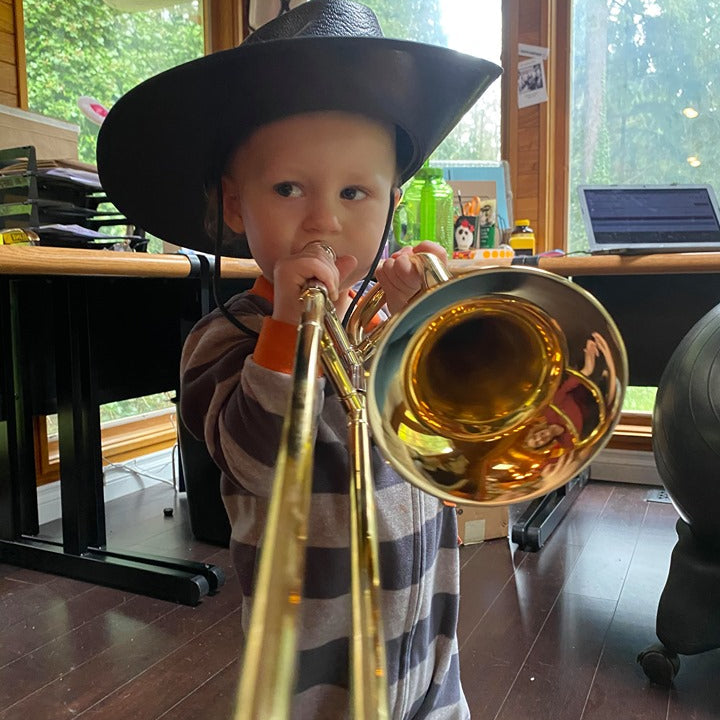
History lessons aside, can we just be blunt? It is as cute as a button. When we opened up this instrument in the shop for the first time, my immediate impulse was to give it to our favorite 2 year old (AKA Little Quinn) to play with. SO MUCH CUTE.


The tenor trombone and bass trombone are the most popular members of the trombone family, perhaps that's what makes the soprano trombone all the more interesting. If you never played the soprano trombone but are considering taking up this unique brass instrument, there's no better time than the present! Carpe Trombone!
Angela
Share:
What’s on My Bench? A Bach Mt. Vernon Model 8 Trombone
What’s On my Bench? A Conn 4B Bass Trumpet