call

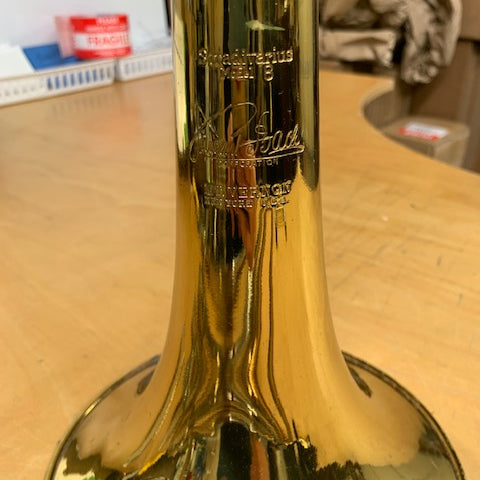
Hey, Brass Fans! We’ve had lots and lots of cool horns in the shop lately, but here’s one you won’t see every day, and it’s in really nice shape.

This horn has been played, but it has also been taken care of - obviously its previous owner loved it! It shows some signs of repair, such as moisture under the lacquer on the handslide crook, but it still plays very well. Its smaller bore size makes it very good for higher register lead work, and it is solid enough to gig for years to come.

One nice thing about a vintage horn that’s not cosmetically perfect is that you don’t have to be as afraid to take it out on gigs! It even has its original case in great condition.

Serial number puts this one at 1955. Look for it in our listings soon!

Wishing you the best trombone tailgates!

Amanda
Latest Stories

View all

Shires Q38 and Q39 Contrabass Trombones: European vs. American Tuning

Shires Q38 and Q39 Contrabass Trombones: European vs. American Tuning

We are thrilled to welcome the Shires Q38 and Q39 contrabass trombones to the shop, offering players a serious and professional entry into the world of true low brass authority. These models acknowledge the diverse traditions of contrabass playing by offering two distinct tuning systems: the Q38 in European tuning (F/D/BBb/AAb) and the Q39 in American tuning (F/Db/C/AA). With additional options for gold or yellow brass bells, these instruments provide the depth and presence required for the most demanding orchestral and film repertoire.

Read more

The Eastman CC Tuba Guide: Finding Your Sound in the EBC Series

The Eastman CC Tuba Guide: Finding Your Sound in the EBC Series

We are pleased to announce the arrival of the Eastman EBC632, EBC832, EBC834, and EBC836 in the shop. From the nimble versatility of the 632 to the massive, "architectural" foundation of the 836, this lineup provides a thoughtful range of sizes and response profiles for every stage of a player's career. Whether you are a conservatory student preparing for auditions or a professional anchoring a symphonic section, these instruments offer a persuasive look at the future of modern CC tuba design.

Read more

Adolphe Sax Ophicleide

Adolphe Sax, the Ophicleide, and a Remarkable Survivor: AS189 in G

While Adolphe Sax is immortalized by the saxophone, his deeper legacy lies in his drive to standardize and reshape the nineteenth-century orchestra. Lesser known is his refinement of the ophicleide — a keyed brass predecessor to the tuba. At the center of this history is AS189, a remarkable surviving instrument in the unusual key of G. Unlike most Sax ophicleides locked away in institutional collections, AS189 remains in private hands, offering a rare, tangible link to an era of musical experimentation before the modern brass section took shape.

Read more