
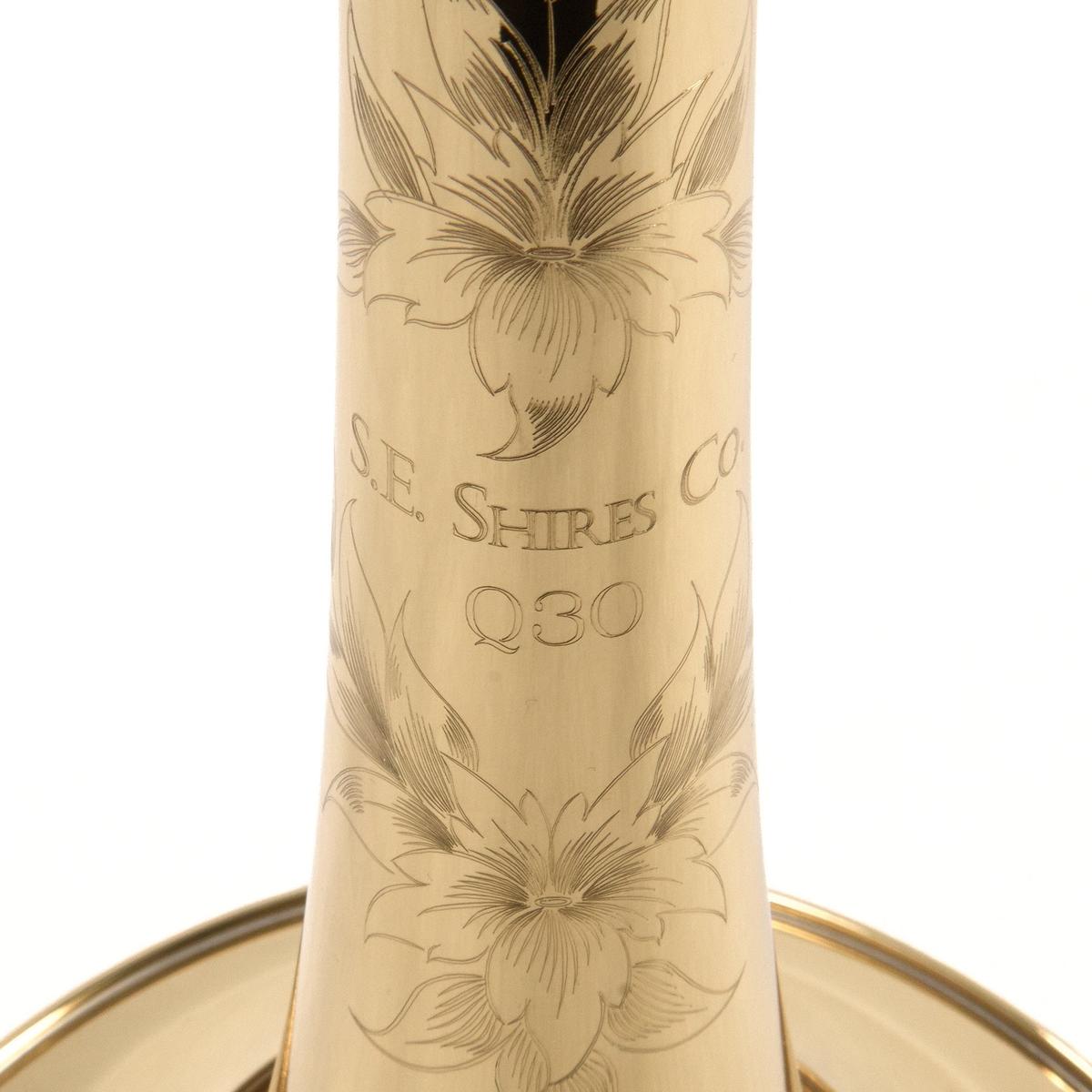
If you’re searching for a professional symphonic tenor trombone that delivers both quality and value, the Shires Q-Series is built to offer much of the performance and craftsmanship associated with Shires instruments at a more accessible price. This guide compares the key models—Q30YA, Q30YR, Q30GA, Q30GR, and QALESSI—so you can choose the option that best matches your sound goals and valve preference.
Quick Answer
S.E. Shires Q-Series symphonic tenor trombones are professional-level instruments designed to deliver Shires build quality and performance at a more accessible price. The lineup differs primarily by valve type (axial-flow vs. traditional rotary) and bell material (yellow vs. gold brass), which directly affect response, resistance, and tonal color.

What Is the Shires Q-Series?
The Shires Q-Series is a family of fixed-spec professional symphonic tenor trombones aimed at advancing students, serious amateurs, and working professionals who want reliable orchestral performance without the cost of a fully modular custom build. Each model is designed for consistent craftsmanship and predictable playability, with options tailored by valve design and bell material.
Why Choose a Shires Q-Series Trombone?
- Professional sound and feel at a lower price point than many custom builds
- Consistent build quality backed by Shires’ design standards
- Versatile tonal options for orchestral, band, chamber, and solo work
What Are the Q-Series Models?
- Q30YA: Yellow brass bell, axial-flow valve
- Q30YR: Yellow brass bell, traditional rotary valve
- Q30GA: Gold brass bell, axial-flow valve
- Q30GR: Gold brass bell, traditional rotary valve
- QALESSI: Signature design developed with Joseph Alessi, featuring a distinctive bell/leadpipe approach and Alessi-spec valve
How Do the Q-Series Models Differ?
The differences that matter most are valve type and bell material.
Comparison Overview
| Model | Valve Type | Bell Material | Sound Profile | Best For |
|---|---|---|---|---|
| Q30YA | Axial-flow | Yellowbrass | Bright, open, responsive | Principal/solo, players wanting low resistance |
| Q30YR | Rotary | Yellow brass | Clear, focused, classic | All-around symphonic and ensemble work |
| Q30GA | Axial-flow | Gold brass | Warm, flexible, open | Section blending with ease of response |
| Q30GR | Rotary | Gold brass | Darker, rounder, centered | Symphonic blend and traditional feel |
| QALESSI | Rotary | Yellow brass | Focused, flexible, refined | Advanced/professional artistry |
Valve Types Explained: Axial-Flow vs. Rotary
Axial-Flow Valves
- Smoother, straighter airflow for a more open, free-blowing feel
- Quick response with minimal resistance
- Popular for smooth slurs and ease in the low register
- Found on Q30YA, Q30GA
Traditional Rotary Valves
- Familiar resistance and centered response
- Classic symphonic feel many players prefer
- Known for reliability and consistency in ensemble settings
- Found on Q30YR, Q30GR, QALESSI
Bell Materials Explained: Yellow vs. Gold Brass
Yellow Brass Bells
- Brighter, more projecting tone
- Clear articulation and presence
- Used on Q30YA, Q30YR, QALESSI
Gold Brass Bells
- Warmer, rounder tonal color
- Often favored for blend in large orchestral textures
- Used on Q30GA, Q30GR
What Makes the QALESSI Different?
The QALESSI model reflects the design approach developed with Joseph Alessi and centers on how materials and bracing influence resonance and response.
How the Alessi Rotor Differs from a Standard Rotary Valve
Compared to a traditional rotor design, the Alessi valve incorporates several structural changes intended to increase resonance while maintaining efficiency:
-
Reduced bracing overall
-
Different valve wrap design
-
Gold brass F-attachment tuning slide
-
Yellow brass brace tubes
-
Bronze valve cap
With fewer brace contact points on the instrument, the tubing is allowed to vibrate more freely. In practical terms:
-
More bracing → greater structural stability, slightly less resonance
-
Less bracing → increased color and resonance, with a more flexible feel
The Alessi design aims to balance the familiar efficiency of a traditional rotary valve with enhanced tonal color through material selection and reduced structural constraint.
How This Affects Playing FeelPlayers typically notice the Alessi-style setup as:
-
Responsive with strong tonal presence
-
Flexible in dynamic shaping
-
Slightly more resonant through the valve section
-
Still grounded in a traditional symphonic response
This design approach is especially appealing to advanced players who are sensitive to how material and construction influence tonal character.
Which Shires Q-Series Trombone Is Right for Me?
- Choose Q30YA if you want a bright, open sound with low resistance for principal or solo work.
- Choose Q30YR if you prefer a classic symphonic feel with clarity, focus, and projection.
- Choose Q30GA if you want warmth and blend but still value the openness of an axial-flow valve.
- Choose Q30GR if you favor traditional response with a darker, rounder tone for section playing.
- Choose QALESSI if you’re an advanced or professional player seeking a signature design with maximum flexibility.
Quick Decision Guide
- Yellow brass → brighter, more projecting
- Gold brass → warmer, more blending
- Axial-flow → open feel, fast response
- Rotary → traditional resistance, centered focus
- QALESSI → premium signature option
Summary
Every Shires Q-Series trombone is designed for professional symphonic performance, with differences tailored to tonal preference and valve feel rather than overall quality. Start by choosing your preferred tone color, then your valve response, and finally your primary playing context.
FAQs
Are Shires Q-Series trombones professional?
Yes. The Q-Series is built for serious symphonic performance, offering professional-level playability and consistency in a fixed-spec format.
Axial-flow or rotary—which is better?
Neither is universally better. Axial-flow typically feels more open and free-blowing, while rotary offers traditional resistance and a centered response profile.
Which model blends best in orchestra?
Gold brass options (Q30GA, Q30GR) are commonly chosen when warmth and blend are the priority.
Which model is best for principal or solo playing?
Yellow brass with an axial-flow feel (Q30YA) is often preferred for clarity, presence, and a more open response.
Is the QALESSI worth it?
For advanced players seeking refined flexibility and a signature response profile, the QALESSI can be a strong fit. The QALESSI model shares its valve design with the Custom Alessi but uses different alloys for a slightly more centered feel, while the overall Alessi valve concept emphasizes resonance through reduced bracing and strategic material choices.
Browse our full line of Shires Trombones here.
Share:
The Altus Handmade Flute Series: A Complete Guide to Models, Materials, and Sound
Adolphe Sax, the Ophicleide, and a Remarkable Survivor: AS189 in G