
Hello Brass Fans!
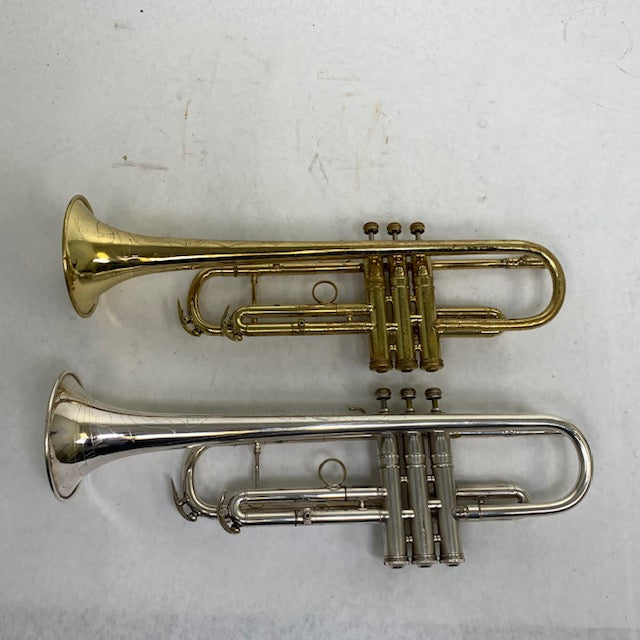
Today, I thought I’d share something from my own collection, it’s probably the rarest thing I’ve got. Shown here are actually two horns from my own collection, a 1947 Conn 22B in lacquer, and 1942 Conn 112B in silver. The 22B is a very common horn, easy to find from multiple years of production. I found this one at an estate sale for $10 a couple of years ago, and couldn’t pass it by at that price. It’s not a perfect horn, it has a lot of wear and signs of repair. The leadpipe and/or receiver have been replaced at some point in its life, so the typical 22B stamp is not on the mouthpiece receiver as would be expected, but shows every other hallmark of a 22B.


The main difference between a 22B and a 112B is the bell - a 22B has a yellow brass bell, while a 112B has a Coprion copper bell.


So, now we get to the story of the 112B! During the start of WWII, Conn was no longer able to procure copper for the Coprion bell 12B. They decided, instead, to make a version with a heavier yellow brass bell than the 22B, and named it the 112B! This is proven with the difference in weight between these two horns, with the 112B weighing in at 2.6lbs and the 22B at 2.2lbs.
The 112A cornet and 112B trumpet were only produced between January and August of 1942, so very few were made. After doing a little research, it seems that there are only seven trumpets and four cornets known to exist, so I have a unicorn in my stable! While it does show a bit of wear, it’s still in great shape and is a fabulous player. I wish they still made them today! This one has a very happy home in my collection, and occasionally comes out for a practice session or rehearsal. I won’t be parting with it anytime soon!

Wishing you some magical unicorns in your collections!
Amanda
Share:
What’s on My Bench? A Bb Tenor Sousaphone
What's on My Bench? Custom Engraved 1920's Trombones